Showing posts with label blogathons. Show all posts

CCLP Reads: The Black Cauldron by Lloyd Alexander (1965)

Monday, April 17, 2023

To my surprise, I enjoyed The Black Cauldron more than The Book of Three. Some of my issues with the first installment weren't really a problem in the second. Eilonwy seems to be mellowing, but I suppose that only makes sense since it's been about a year between books one and two. Taran is as noble as ever. There's event a sense of Taran coming into his own, overcoming the stigma that comes along with being of a lower rank. There is more to heroism than being a warrior. Although I do still think Lloyd Alexander followed some of the same basic plot ideas as Tolkien. A fellowship of individuals who set out on a quest to retrieve an item of great power and evil and destroy it? I'm sure Tolkien isn't the first to come up with the idea, but still, I wish Lloyd Alexander had deviated just a little bit more. Even the "villainous" character of Ellidyr, who I do greatly pity just like Taran does, behaves quite a lot like Boromir.

Anyway, there is less objectionable content than in the The Black Cauldron Disney film, even with the three enchantresses who are a version of The Fates from Greek mythology. In the film, there are some serious issues, but in the book, there's no changing into frogs and no frogs falling into an enchantress's cleavage. So I was glad. It's a sad story, and a few of the companions do die, although not the main group of 4 characters from The Book of Three, so Taran, Eilonwy, Gurgi, and Fflewddur live to the end. A new favorite character of mine, sadly, didn't make it through to the end of the story, which is a shame. He was lovely, patient, and gracious.

Read More

CCLP Reads: The Book of Three by Lloyd Alexander (1964)

Friday, April 14, 2023

My only prior experience with Lloyd Alexander is the rather terrifying 1985 Disney film The Black Cauldron. I've watched it multiple times and still don't really like it. I was hoping that I might feel different about the book series, The House of Prydain, that the movie was based on.

Taran is an assistant pig-keeper for a pig named Hen Wen who can somehow tell the future, so she's called an oracular pig. Long story short, the Horned King is a terrifying enemy and a servant of Arawn, Death-Lord of Annuvin. When The Horned King comes close to Taran's home, all the animals make a run for it, including Hen Wen, and Taran, loyal boy that he is, chases her. He has one adventure after another, bumping into the cornw prince of Prydain named Gwydion. They travel together for a while, still searching for Hen Wen, but also now needing to reach Caer Dathyl, a home castle base as it were, of the Horned King's movements. Enter Gurgi, a bizarre, half-human and half-animal creature who is surprisingly loyal to Taran and Taran's develops a fondness for him, especially when Taran provides him with his "munchings and crunchings" as a reward for his help. There's a capture that happens, Taran's locked up, he meets a girl named Eilonwy who is by far one of the most annoying female characters I've ever encountered, but she manages to free him. It really just goes on and on, so for such a short book, it crams a lot into it.

I really wish I could say that I liked it, but all the way through I couldn't stop thinking that it was a poor substitute for Tolkien's The Lord of the Rings. I mean, it really is a bit of a knock-off. Maybe that wasn't Alexander's intent, but that's what happened, even down to these flying creatures who serve the Death Lord and Gurgi, who's a slightly tamer version of Gollum. It's interesting, but as a child if I'd read it, I wouldn't have liked it much. I don't like the idea of oracular pigs and word sticks being used to tell the future, especially not in children's fiction. And I genuinely disliked Eilonwy, the lone "good" female character. That girl prattles and rattles and believes she knows best and holds grudges, and is just downright obnoxious. She's arrogant and insufferable and one of the reasons I dislike her is because some of her traits are some of the ones I don't like about myself, so yeah, they always say the characters we dislike the most are the ones we resemble (even if it's just slightly), so there you go.

Read More

CCLP Read: The Borrowers by Mary Norton (1952)

Sunday, April 9, 2023

Yay, The Borrowers is my first read for the Classic Children's Literature Party that I'm hosting!

If you've never read this delightful book then I highly encourage it! I just bought the boxed set of the first four novels last year and did read them last year, and I can honestly they are some of my favorites, with the first book, The Borrowers, being an absolute classic. I thoroughly enjoyed re-reading it this month.

The story follows a family of tiny people, known as Borrowers, who live in the houses of big people, meaning us. This family has Pod Clock, his wife Homily, and their only daughter Arrietty. They're probably the size of 1/12 dollhouse people, and so their belongings are a hodgepodge of items they've created, such as Arrietty's bedroom that's made of two cigar boxes, or things they've borrowed and repurposed, like the cog they use for their fireplace. They live under the kitchen floor in an old Victorian house, and their only entry too and from their home is under the enormous Grandfather Clock that must never be moved or it might stop working.

Arrietty is a lover of adventure, and a quite educated girl, for a Borrower. She even knows how to read and to write, and she has tiny Tom Thumb editions of certain books that she peruses regularly. Unfortunately for Arrietty, she has reached that frustrating age of feeling stifled, so just hitting the teenage years, which I myself remember quite well. Arrietty so desperately wants to be allowed to go borrowing with her father. Except, only boys are trained as borrowers. 

Read More

Children's Literature Party Reading Ideas!

Monday, April 3, 2023

This post is written for the Classic Children's Literature Party for 2023!

Ok, so if you're anything like me, then there's a good chance when you try to think of classic children's authors, you draw a bit of a blank. Actually, anything that's more than 50 years old is pretty much considered to be a classic, and that widens your reading options considerably! If you also have a list of suggestions, I encourage you to share it on your blog and then add your link to the party!


I've read quite a few books from the Newbery Medal list and am always pleasantly surprised by the results. Here's some I gleaned from the list, names that I know, some of my sister's favorites, and a few of my own!

  • Frog and Toad Together by Arnold Lobel (1973)
  • Julie of the Wolves by Jean Craighead George (1973) 
  • Mrs. Frisby and the Rats of NIMH by Robert C. O'Brien (1972) 
  • Sing Down the Moon by Scott O'Dell (1971) 
  • Sounder by William H. Armstrong (1970) 
  • The High King by Lloyd Alexander (1969)
  • From the Mixed-Up Files of Mrs. Basil E. Frankweiler by E. L. Konigsburg (1968)
  • The Black Cauldron by Lloyd Alexander (1966)
  • A Wrinkle in Time by Madeleine L'Engle (1963) 
  • Island of the Blue Dolphins by Scott O'Dell (1961) 
  • The Witch of Blackbird Pond by Elizabeth George Speare (1959) 
  • The Family Under The Bridge by Natalie Savage Carlson (1959) 
  • Old Yeller by Fred Gipson (1957) 
  • Charlotte's Web by E. B. White (1953) 
  • The Door in the Wall by Marguerite de Angeli (1950) 
  • Strawberry Girl by Lois Lenski (1946) 
  • Johnny Tremain by Esther Forbes (1944) 
  • Caddie Woodlawn by Carol Ryrie Brink (1936) 


And of course, there are always old series standbys like, some of the following series of children's books.

  • Pippi Longstocking by Astrid Lindgren
  • Little House on the Prairie by Laura Ingalls Wilder
  • The Borrowers by Mary Norton
  • The Chronicles of Narnia by C. S. Lewis
  • Mrs. Piggle-Wiggle by Betty MacDonald


We mustn't forget those incredible classics that we've probably read so many times that we forget about them being children's books.

  • A Little Princess by Frances Hodgson Burnett
  • The Secret Garden by Frances Hodgson Burnett
  • Little Lord Fauntleroy by Frances Hodgson Burnett
  • The Princess and the Goblin by George Macdonald
  • The Princess and Curdie by George Macdonald
  • The Hobbit by J. R. R. Tolkien
  • Alice's Adventures in Wonderland by Lewis Carroll
  • Through the Looking Glass by Lewis Carroll
  • Treasure Island by Robert Louis Stevenson
  • Winnie the Pooh by A. A. Milne
  • Anne of Green Gables by L. M. Montgomery
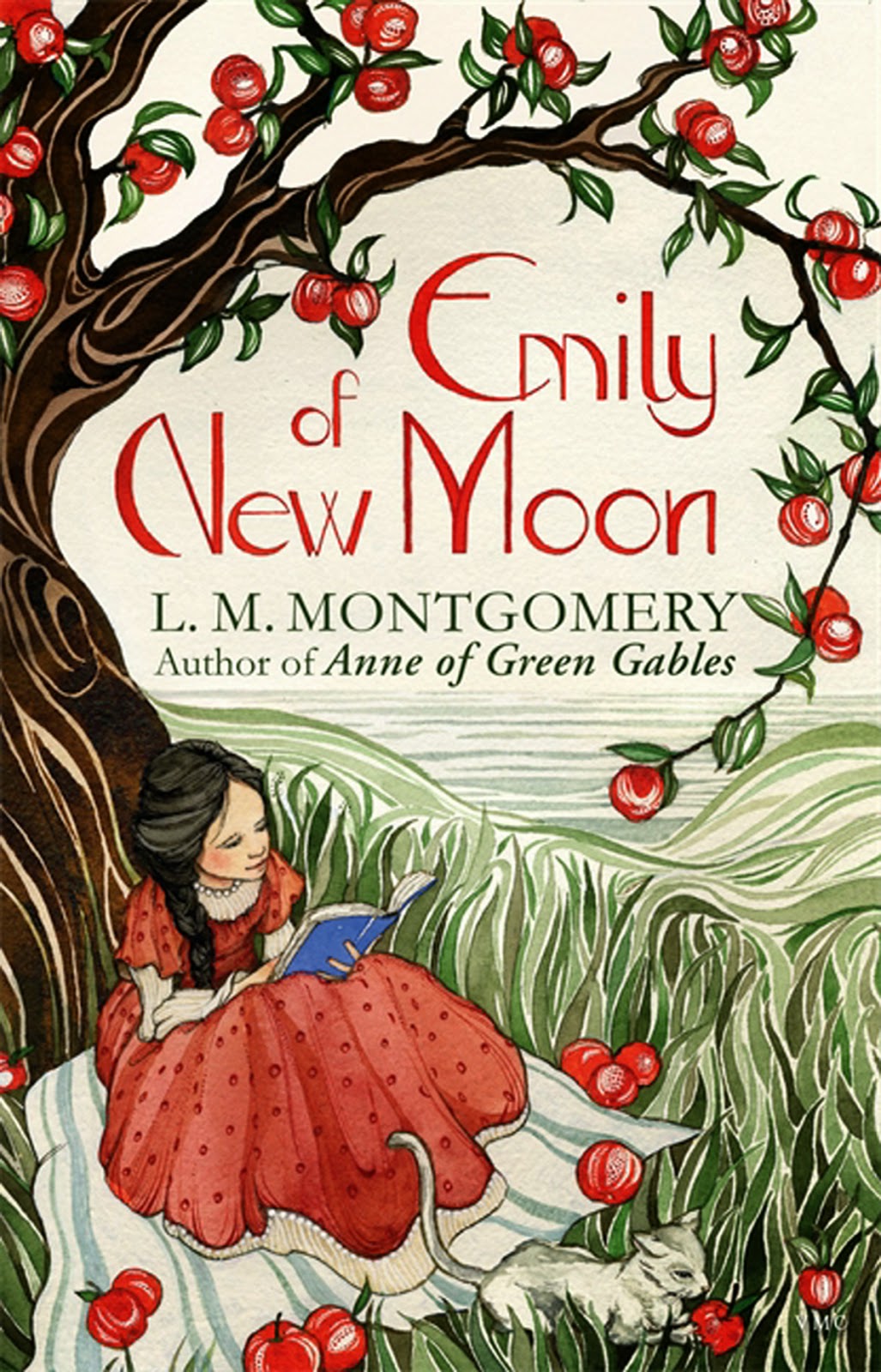
  • Emily of New Moon by L. M. Montgomery

These are only a few humble suggestions, for my own benefit as well as anyone else who needs a handy list. Enjoy browsing through your bookshelves or raiding your public library or used bookstore for some new reads! Happy Reading!
Read More

Welcome to the Classic Children's Literature Party for 2023!

Saturday, April 1, 2023


Welcome to the Classic Children's Literature Party of 2023!

If it goes well, I may host it every year.

My personal experiences with children's literature when I was an actual child pretty much stayed in its own little wheelhouse of Hardy Boys, Nancy Drew, and Trixie Belden. And I read a lot of wonderful Christian children's series that I would check out from my church library. I honestly don't recall reading much else, and I really never delved into what we would now call classic children's literature. I did read Narnia, naturally, and I plan to read at least one book for this party, and I read The Princess and the Goblin, one of my favorite children's books by George Macdonald. But nothing else that would fall into the classic children's literature bracket.

My reading has expanded in recent years, and thanks to my sister, I have actually found a lot of wonderful children's classic literature that I wish I had read as a child. But there's something special about reconnecting with children's literature as an adult, finding a new story that sparks our imagination. That's my goal with this party, that your imagination would be sparked and that you would just feel warm and comfortable and joyful as you proceed through your reads.


I have some guidelines below that have been tweaked a little bit from my initial Announcement post, and we've got a Mister Linky for you to add your blog posts to the Party list. It's going to be very casual and I hope hope you have a wonderful time! 😘
  • I consider children's classics to be in the Jfiction arena, so probably for elementary or preteen age groups.
  • A common measuring tape using for classic literature is that it must be at least 50 years old. So let's stick with that measure, only books 1973 and older. I'm good with the publication month being after April in 1973. 
  • Go wild with books from other countries and translations other than English.
  • Since Ivy Miranda asked about movies based on classic children's literature, I will give that the green light. If one of your favorite movies is based off classic children's literature, by all means, please feel free to write about it.
  • Once you've written your blog post, add the link to the Mister Linky below and comment this post.
  • The party runs the entire month of April to give you ample time to schedule your reading and so we don't feel rushed!

Read More

We ♥ L. M. Montgomery Week - Emily of New Moon (a review)

Thursday, February 23, 2023


Emily of New Moon was read for Hamlette's We Love L. M. Montgomery Week. ♥

This was my first time reading Montgomery's Emily of New Moon. It's incredible how fast I read it. It was hard to put it down when I had to do other things, like, oh work or sleep or go run errands. It's a very enchanting, melancholy sort of story, and I was completely pulled into it.

Creative souls are hard to come by sometimes and Emily Byrd Starr is, if at all possible, even more creative and imaginative than Anne Shirley. She's a wild thing, born of the fey, on so many levels.

For the unfamiliar, like I was, Emily is orphaned early in the book and, through no other alternative, goes to live with her mother's family. She was raised wild by a father much like herself in personality, and her mother's family despised him. So it's a struggle for her, going to live with an aged aunt who appears to find her troublesome at best and hateful at worst. Aunt Elizabeth Murray is the matriarch of New Moon farm. Aunt Laura is the sweeter, meeker younger sister, and Cousin Jimmy is kind, but also appears to have some sort of interesting mental defect that might make him slightly dangerous. Or at least, there are times when Emily feels slightly fearful of him, although she's not entirely sure why.

I won't go in depth into the darker side of the book here, or the elements that troubled me, but it's impossible to read Emily of New Moon without realizing and appreciating that Montgomery herself must have felt things very, very keenly. I looked a bit into her life, not much, but just a bit, and realized she was much like her heroines in a variety of ways. I had no idea that her use of "the flash" for Emily's brilliant and spiritual inspirations came from her own experiences with it.
Read More

Welcome to 2023!

Wednesday, January 11, 2023


Yes, things were sporadic last year, for a variety of personal reasons. It was not an easy year, by any means, but there is a somewhat brighter outlook right now so I'm making plans for this blog that you can count on going forward.

Read More

Pretty in Pink: A Lesson in Unrequited Love

Sunday, February 14, 2021

Blane, Andie, and Duckie in Pretty in Pink (1986)

Written for the Unhappy Valentine's Blogathon hosted by PEPs.

So many times, unrequited love happens because one member of a long-standing friendship falls in love with the other member.

Such is the case with Pretty in Pink.

A cinematic stunner written by John Hughes, Pretty in Pink puts 1980s teen romance on display with one of the most used and abused tropes in the history of fiction, that of the love triangle.

Andie (Molly Ringwald) and Duckie (Jon Cryer) have been friends since before forever. Best friends, even. And somewhere along the way, Duckie fell in love with her.

Unfortunately for him, Andie has been in love with pretty-boy Blane (Andrew McCarthy) for just about as long as Duckie has been in love with her. 

What a mess!

And of course, Andie from the lower-income family ends up with rich boy Blane instead of best friend Duckie because that's just the way the world works.

Duckie and Andie going to prom (that is admittedly a hideous dress)

Duckie is a goofball and no mistake. But he's a sweetie. He comes from a similar low-income background to Andie and they've been like twins since forever. His yearning for her makes my heart break every time because the audience can see how dearly he loves her, and we can also see how clueless she is and that it's just never going to work.

Ms. Ringwald much later actually outed Duckie as gay, and all I can say to that is that if it's news to the author of the screenplay and the actor playing Duckie, then you're barking up the wrong tree, girl. Apparently, the character is too flamboyant? More than likely his flamboyance is due to his personality type and not his sexuality. I know my fashion and my sister's fashion are both due to our personality types so, to me, that makes the most sense. I suspect Ms. Ringwald just didn't like Jon Cryer, so she undermined the characters' relationship. Shame on her if it's true.

I guess the biggest question is should Andie and Duckie have ended up together? They have more in common, by far. Duckie has more personality in his pinkie finger than Blane has in his entire body, so there's that. And he's just one of those guys that makes you feel warm and comfortable like you've wrapped yourself in a favorite quilt. so, yes, it's a shame that Duckie and Andie were fated to never get off the ground. It's not fair, but I put the blame more on Ms. Ringwald's stubbornness than on Jon Cryer's vibrancy. If she'd tried just a little bit harder to perform with some chemistry, then maybe Duckie and Andie would have had the ending they deserved.

Ultimately, Duckie gets the short end of the stick against the will of John Hughes himself who was bullied by the studio into changing the end of his story.

Duckie and Andie

Pretty in Pink is not one of my favorites of John Hughes' films because Andie and Duckie were sidelined in favor of the rich boy. Not that I'm against falling in love with a rich boy, but it's the same issue I had in the tv program, Veronica Mars. Veronica and Duncan are boring. There are no sparks whatsoever and yet, fans endured waaaaaay too many episodes of them together. It's the same here. Andie and Blane are boring, and on top of that, he's a bit of a bully which is a whole other problem, end of story.

Duckie deserves kudos, though. Apart from John Bender in The Breakfast Club, Duckie is my favorite of Hughes' male characters. He's proof to me that the boy next door can be brilliant. I know, that's another old trope, but sometimes it's one worth using. 

Read More

Valentine's Day Period Drama Tag

Friday, February 12, 2021

Here are my answers to Heidi's tag for her Valentine's Day Period Drama Blog Party at Along the Brandywine. It was immensely fun to fill out and made me stop to think and remember some of my favorite period dramas. That was exciting.

My main blog post for her blogathon is about Christine and Raoul from The Phantom of the Opera, in case you're interested.

1) Your current three (or up to five!) favorite period dramas?

I'm not watching very many period dramas at the moment but if I were to pick, it would probably be the following:

Sense and Sensibility from 1995 because the film is just so pretty to look at and I just love Emma Thompson as Elinor Dashwood. It's stunning.  It's also rather funny seeing Hugh Grant bumble about so awkwardly in Regency clothes. Poor soul, he's much more suited to films like Music & Lyrics or Paddington 2. 

The Personal History of David Copperfield from 2020 with Dev Patel because the casting is so remarkably clever and it's just a truly excellent film, and very clean, practically no objectionable content. My favorite adaptation so far and that's saying something since Maggie Smith is hard to beat. I wish it had gotten half the acclaim as that heinous miniseries Bridgerton. 

And then the 1982 film adaptation of The Scarlet Pimpernel with Anthony Andrews and Jane Seymour. Because no one can beat this adaptation and the lead couple is darling. It's a truly stunning film and it just makes my heart happy.

2) What would you recommend to someone who’s never seen a period drama as a starter?

Probably something that's Jane Austen, maybe the 2005 Pride and Prejudice with Keira Knightley, or the 1996 Emma with Gwyneth Paltrow and Jeremy Northam. They're film length so nothing too intimidating and they're extremely pretty, plus, they star fairly well-known actors and that can be a help when people are first starting out in the period drama realm.

3) A favorite couple that wouldn’t be included in answer #1 (cause I’m figuring those are already top favorites ;)) and/or a favorite secondary character romance? 

Oh the tragedy of it all, poor Ivanhoe and Rebecca, doomed to fail before they ever got started. And why you ask? Because he is a Christian knight and she is a Jewess. It crushes my very soul. As you may have guessed, I'm not a fan of the main romance in Ivanhoe (specifically the 1982 version with Anthony Andrews), but instead, I wish it could have been different and Ivanhoe and Rebecca could have been together. They were so clearly drawn towards one another, but alas, it was not meant to be. Pardon me while I go weep in a corner.  I wrote in greater detail about Ivanhoe and Rebecca in my Sacrificial Love: Ivanhoe and Rebecca blog post.

4) What do you consider foundational qualities for a healthy romance? 

The ability to respect boundaries, have mutual interests, and mutual political and religious associations. The ability to still maintain and even grow other relationships in addition to the romantic one, that's a biggie. So in other words, not Edward and Bella from Twilight. They're the antithesis of a healthy relationship.

5) Worst villain/antagonist?

I truly despise Mr. Grandcourt from Daniel Deronda. He absolutely makes my skin crawl. He's just horrendous on so many levels, but especially for forcing his wife to have intimacy. It was just so bad. It's a wonder I can stomach Hugh Bonneville in anything else, but I'm actually very fond of him as an actor, just not in Daniel Deronda. I guess it means he did his job right.

6) A favorite proposal scene?

I'm sorry guys, but I LOVE the absurdity of Mr. Darcy's first proposal. He muffs it, big time, and I always laugh in every single version I've seen.

I'm especially partial to the proposal in the 1938 version where Laurence Olivier's eyes pretty much pop out of his head in astonishment at her refusal, which you can see above. Ignore the inaccurate costuming, I know they're off in era, but for me, it doesn't matter.

7) Favorite period drama characters based on a real-life couple?


I don't really watch a lot of biographical type period dramas, but if I were to take a stab in the dark, I would go with Victoria, meaning Victoria and Albert. I only watched the first season, but it was very good and I enjoyed their relationship.

8) Any classic b/w period dramas you like?

I love the 1938 Pride and Prejudice with Greer Garson and *flutters eyelashes* Sir Laurence Olivier. I know, I know, it doesn't match the Regency era and the fashion is all wrong. But I LOVE it anyway. It was my first introduction to Jane Austen when I was a teenager, and I have loved it ever since.

Laurence Olivier does this thing with his gloves when he takes them off. It just makes me giggle every time. Seriously.

9) Most mature romance in a period drama? (mature as in age and/or characters who are consciously and wisely ripened by life experience, etc.)


Mmmm, I would say Doctor Thorne and the American heiress Martha Dunstable. I love the miniseries Doctor Thorne, and this couple truly made me happy. I realize she's not that old, but Doctor Thorne has charming grey hair. Their attraction is downplayed by the younger couple, but it's quite real and quite charming.

10) Most excruciatingly long, slow-burn romance in a period drama?


Margaret Hale and John Thornton in North & South. It takes them FOREVER to get ANYWHERE. It's a beautiful miniseries, but it does drag on endlessly. And then even more endlessly beyond that. It is an endless trail of endlessness.

11) A story that has multiple film adaptations where you love more than one of them?

I'm partial to 3 versions of Jane Eyre.

The 1943 version with Orson Welles and Joan Fontaine is excellent, although his Mr. Rochester terrifies me the most of all of them. Then there's the 1983 version with Timothy Dalton and Zelah Clarke. That one's my personal favorite. And, of course, the 2006 version with Ruth Wilson and Toby Stephens.

All 3 of them have their merits and considering I've never gotten past 100 pages in the novel, I'm not busy comparing film to book, just film to film. And I happen to love Timothy Dalton as Mr. Rochester and I adore Zelah Clarke's unbridled spunk. They're brilliant.

12) A book you think needs to be made into a film (or a new adaptation)?

Would somebody please remake Jane Austen's Northanger Abbey and do it RIGHT, without all of the stupid visions and imaginings that they love to put Catherine Morland through? Could she please be allowed to just be an innocent girl who enjoys reading who falls in love with a charming and slightly snarky vicar? That's all I ask. Just do it RIGHT, with the proper casting (a feat they haven't managed yet), without adding any politically correct nonsense or rewriting the story to be just shy of absurd. It shouldn't be so hard to do a proper adaptation!

Read More

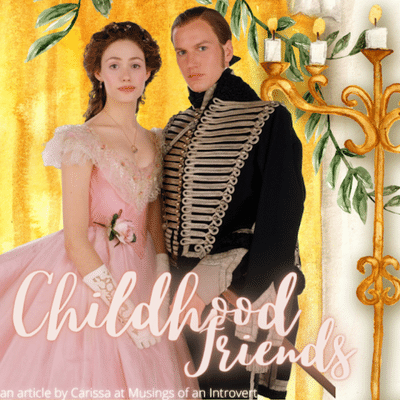
Childhood Friends: Raoul and Christine in The Phantom of the Opera (2004)

Thursday, February 11, 2021


Written for the Valentine's Day Period Drama Blog Party hosted by Heidi at Along the Brandywine.

And many thanks to my blogging buddies who helped me choose my topic! As you can tell, PotO had the most votes. 😉

There has always been and will always be the age-old battle of the love triangle in The Phantom of the Opera.

Do we love the Phantom and Christine or Raoul and Christine? 

I was on the side of the Phantom and Christine for many, many years. Erik (the Phantom) is a pitiable character and there's something appealing about being worshipped. He's desperate for connection and relationship and we can all relate to that reality. 

But approaching relationships in such an obsessive way is dangerous. Especially when people start dying. Erik is a terrifying figure, lonely or not, and Christine is more afraid of him than in love with him. A relationship built on fear is bound to fail.

Somewhere along the way, my loyalty shifted to Raoul. 

Not every Raoul, mind you, but Patrick Wilson's Raoul possesses a tenderness that is sometimes lacking in the character. I don't know if it's simply because his costar, Emmy Rossum, was so young, or if that's the approach the director wanted, or if it was his own idea. But whatever the reason, it works.

Here is their rendition of All I Ask of You. It's sometimes easy to miss the importance of Christine's desire to not live in the night, and Raoul's desire to be light for her. It's a deeply moving moment in the film and any of the stage productions.

What it really comes down to is Christine's choice. One man is her choice and the other is not. Raoul could be the nicest man in the world, but if Christine had chosen Erik? It would have been her choice, foolish, but still, her choice and Raoul wouldn't have really had a right to interfere.

Christine's only hesitations to develop a relationship with Raoul openly are born out of fear. Fear that she would upset her Angel of Music, that he would turn against her, and even that he might hurt someone if she disobeyed him. Her requests to keep her engagement with Raoul a secret until the right time, even her reluctance to go with Raoul after the performance because she knows her Angel will visit, none of those moments speak of trust or respect to the Phantom, simply of fear of repercussion.

I adore their reunion scene (minus Raoul's not listening, but we'll get into that later). Christine is sitting at her dressing table, brow furrowed, afraid, and then Raoul comes and her smile lights up the room. The relief on her face when they embrace is palpable. It's beautiful, the banter, and the shared memories they possess from a sweeter, more innocent time.

As it stands, Raoul and Christine move from reunited childhood friends to an affianced couple super quickly. Raoul never gives the impression of being a playboy. He recognizes Christine from when they were children (I'm guessing an age gap of maybe 4 years). He remembers Little Lotte and when he renews their acquaintance, he's reminded of all the reasons he liked Christine to begin with. He's not wooing a theatrical ingenue. He's wooing the girl he grew up with.

The downside to Raoul is that he doesn't listen. He doesn't listen when he wants to take Christine out for dinner after her first performance and she tells him it will anger the Angel of Music. And he doesn't really listen when they're trying to coerce her into performing in Don Juan Triumphant in order to trap the Phantom and she's completely terrified and begs him not to put her through this. Unfortunately, this means he's a Victorian man and Victorian men rarely listened to the feminine concerns or worries or reluctances of their women. 

Does this make Raoul any less in my estimation? Maybe a little bit, but his ultimate nobility makes up for the lacking, or what we see as a lacking from our very modern perspective. Regardless he treats Christine gently as if she's precious to him. There is no roughness or harshness in him and that's the main reason why I adore Patrick Wilson's Raoul. 

Raoul is the light and Erik is the dark. In the end, all Christine truly wanted was the light. Erik's attempted corruption of her innocence is horrifying as I view it now through older, more mature eyes. And Raoul's attempts to preserve her innocence endear him to me tenfold.

I would have included the confrontation scene at the end of the film buuuuuuut, I think it might be a little much for this post. So, to sum up, for both Raoul and Christine, romantic love was hovering just out of reach, waiting for them to meet again. And when they do, love awakens.

Many thanks to Heidi for hosting the blogathon and I'm glad I could participate.

Read More

Help Me Decide?

Thursday, January 28, 2021


I'm participating in the Valentine's Day Period Drama Blog Party hosted by Heidi and I have so many ideas plunking around in my head that I just can't decide what to write! 

I'm limiting myself to 5 possible choices and would love your vote for your favorite option(s)! And if you don't have an opinion or are good with me writing anything, then that's fine too. 

What period drama would you like to see me tackle for the Valentine's Day Period Drama Blog Party? 


1) The Phantom of the Opera - because I actually really love Patrick Wilson as Raul and Emmy Rossum is darling as Christine. It's such an interesting film because it gets some things right and some things oh, so wrong, but they definitely got Christine and Raul right. 


2) Jane Eyre - the version from 1983 with Timothy Dalton and Zelah Clarke because this is MY version of Jane Eyre, a book I haven't even completely read yet. Isn't that dreadful?! But I absolutely adore this version of Jane Eyre. I used to think it was because of Timothy Dalton, but actually a lot of it has to do with Zelah Clarke. She is an adorably spunky version of Jane and she just pairs so brilliantly with Timothy. They've got intense chemistry.


 3) The President's Lady - a movie from 1953 about future President Andrew Jackson and his scandalous courtship and marriage to divorcee Rachel Donelson. Such a beautiful movie and one of my favorite roles for Charlton Heston and my first introduction to Susan Hayward who is AMAZING. I adore it, a truly radiant film with a lot of thought put behind the production and casting choices.

4) Persuasion - the version from 1995 with Amanda Root and Ciaran Hinds because this is really the only version I like so far. I feel they got enough right with this one that it works, and Amanda and Ciaran are darling as Anne and Captain Wentworth. I love the scene where she reads his letter. The Austen heroes and their letters!

5) Lorna Doone - The version from 2000 because it is pure genius and I adore it. Lorna and John Ridd are ADORABLE. Beyond adorable, even. This was my first introduction to Richard Coyle and I've never looked back. The man is a delight. And they are so stinking cute together!


Thank you all for your input! ♥
Read More

Radio Theater: Lionel Barrymore and Orson Welles in A Christmas Carol (12/24/1939)

Tuesday, November 17, 2020

I wrote this blog post to participate in The Sixth Annual Barrymore Trilogy Blogathon hosted by In the Good Old Days of Classic Hollywood. 

A Christmas Carol

Starring: Lionel Barrymore, Orson Welles, Everett Sloane, Frank Readick, Erskine Sanford, George Coulouris, Ray Collins, Georgia Backus, Bea Benaderet, and Edgar Barrier

Aired: December 24, 1939

My Rating: ★★★★★

In all the world, there is no story I love better than A Christmas Carol by Charles Dickens. I collect different and unique print copies of the book, have watched countless versions so long as they preserve the spiritual and social message of Dickens, and have tracked down many different radio dramas and narrations performed throughout the years.

But my favorite radio version, by far, aired on December 24th, 1939, and stars the superlative Lionel Barrymore in the role of Scrooge, with Orson Welles as the narrator.

Go to my Classic Hollywood page to find all my Classic Hollywood reviews!

There is a radiant nostalgia in this particular performance. Orson Welles has always been and will always be my favorite radio theater performer, and so I know I have a lot to thank him for in regards to this version. But there is nothing like Lionel Barrymore's performance. Orson actually played Scrooge in the 1938 production of A Christmas Carol, and I like that version as well, but just as I feel that Sir John Gielgud and Sir Ralph Richardson were meant to perform as Holmes and Watson in their radio series, so too was Lionel Barrymore born to play Scrooge.

Lionel's performance helps the listener see the events as they happen. He sells the idea of ghostly apparitions and heartfelt grief over memories and choices made in the past, and his fear of the future. Two years ago, my father and I sat in front of the fireplace in the living room and just listened to this play, completely ensconced in the world of Charles Dickens. That takes not only a magnificent author like Charles Dickens, and a magnificent narrator like Orson Welles, but a superior performer like Lionel Barrymore for Scrooge.

The briefest segment is with the Ghost of Christmas Yet to Come, chopping out the scenes with Scrooge's business partners and the characters who stole from "Scrooge's" corpse. It's an unfortunate omission, but they couldn't fit everything into the production and squeeze it into an hour. Overall, the story itself preserves all of the spiritual and supernatural elements that make up A Christmas Carol. It's a stunning representation of redemption and proof that a person can change and be someone else, a fact I have always and will always believe, but is important to be reminded of sometimes in literature.

A Christmas Carol aired over the American airwaves as a Christmas gift from the Campbell Soup Company to their buyers and listeners eighty-one years ago. And we have the blessed opportunity to listen to it today. What a miraculous job of preservation, and I extend a heartfelt thanks to Campbell Soup for this beautiful production of A Christmas Carol.


I wrote this blog post to participate in The Sixth Annual Barrymore Trilogy Blogathon hosted by In the Good Old Days of Classic Hollywood. Please click the link or the photo below to read the posts by the other participants.


Read More

Claude Rains, Ann Todd, and Trevor Howard in "The Passionate Friends" (1949)

Tuesday, November 10, 2020

I wrote this post for The Third Annual Claude Rains Blogathon hosted by PEPS.

Today is the first time I watched The Passionate Friends. I've never been a huge Claude Rains fan. He's been in the background of some of my favorite movies, but I never really paid him that much attention. I've done him an injustice all these years by not trying harder to find films featuring him in a more substantial role, and I owe him an apology.

Go to my Classic Hollywood page to find all my Classic Hollywood reviews!


The Passionate Friends involves a complex array of emotions that always come back to the same theme: fidelity or adultery. Happiness or sadness is not always something we can control, but a lot of the time, contentment is well within our control. It's something we either choose or don't choose.

Mary (Todd) is a very contented woman. Her compassionate husband, Howard (Rains) takes excellent care of her and gives her as much attention as he can for being such a busy man with his investments and his work. She likes her husband and he likes her, and if there isn't an enormous amount of passion, well, it is what Mary signed on for when she married Howard.

It's only when Steven (Howard), an old flame of hers, shows up that she's willing to risk it all. All of her contentment flies right out the window as soon as he walks in the door. Whether it's in 1939 when she embarked on her first affair with him or nearly 10 years later when they meet by chance while vacationing in the Alps (on the French side), Mary loses all sense of reason the moment she sees Steven.
Claude Rains and Ann Todd The Passionate Friends
Claude Rains and Ann Todd

This movie saddened me more than I can say, and I'm glad that it was made during the Hays Code since during that era infidelity if shown, had to have negative consequences. Which it always does, anyway, whether people realize it or not. Infidelity is going to hurt someone, deeply, be it children, relations, or one or the other of the spouses, particularly if both individuals are married, then there are two families who are being harmed.

Mary is a woman who likes to think of herself in a certain way. She's the narrator, and because she only sees things through her own lens, she's an unreliable narrator. There appears to be very little reason for her to love Steven over Howard. She appreciates Howard's steadiness, his support, and his affection for her, to say nothing of the wealth he provides. They're very well off. But Steven, well, he's the adventurous, romantic type who reads her poetry, dances with her, and whispers sweet nothings in her ear. She's in love with the idea of being in love, but not to the degree that she truly wants to sacrifice all of her comforts. She's a deeply selfish woman who only truly realizes her selfishness when she sees firsthand the pain she's causing Steven and his family.

Ann Todd and Trevor Howard in The Passionate Friends
Ann Todd and Trevor Howard
When Steven and Mary accidentally meet up ten years later, they go for a picnic in the Alps, have a couple of conversations, and that's it. Steven's happy with his wife and his children and as soon as he parts from his brief reunion with Mary, well, his thoughts are back with his family where they belong. But Mary cannot stand the idea of his happiness being something apart from her. She even imagines him telling her that he never got married because how could he marry anyone other than her. She deludes her so completely into thinking that Steven wants to be with her, that the harm done to Steven and his family is almost irreversible. Thank goodness I said almost because, naturally, there cannot be such a terribly tragic end.

Poor, dear Howard, Mary's husband. A lovely, quiet sort of man with very little visible passion, but at the end, after his first truly infuriated rant at his wife, Howard confesses his love for her. Because somewhere along the way, he truly fell in love with Mary, and he wants to keep her, warts, pains and all. 
Ann Todd and Trevor Howard in The Passionate Friends
Ann Todd and Trevor Howard

The ending had me holding my breath. I honestly wasn't sure what would happen. I won't go into details, but for me, it was highly satisfactory and showed the reality of forgiveness and mercy that can still exist in the world. People say things in anger and they're very true things, but it doesn't mean you can't find your way back from them. The relationship between Mary and Howard is actually a very beautiful thing.

Claude Rains is marvelous in The Passionate Friends. He doesn't have as many scenes as Ann Todd or Trevor Howard, but when he is on the screen, he's a scene-stealer. I appreciated his steady, smooth, professional approach, which made his rage near the end that much more terrifying. I've never seen him as a frightening sort of person, but he managed it there. I'm delighted to say that Claude Rains deeply impressed me and because I watched this film, I will seek out more of his movies.

Claude Rains and Ann Todd The Passionate Friends
Claude Rains and Ann Todd
Other reviewers have mentioned that Ann Todd felt distant in her role as Mary, that they could never fully connect with her, and I agree with them. But I think that's the point. Mary's fooled herself about herself so completely that the audience has no idea who she is. There is no genuine authenticity left in the woman, except perhaps at the very end, but even the ending is selfish on her part, though I'm sure she thinks herself selfless.

Then there's Trevor Howard. My goodness. I've only ever seen him in films from the 1960s so I could have never imagined him this young. I spent half the film disliking Steven, but at the same time, loving Trevor Howard's performance. It was a complicated viewing, to be sure. His character redeemed himself in my eyes because at their 10-year reunion, Steven would not cheat on his wife. And I appreciated seeing Trevor Howard play the character with fidelity at that point. It was refreshing after all of their shenanigans earlier in the film.

Overall, The Passionate Friends is thought-provoking and an overwhelmingly intimate look into the mind of Mary. I appreciate that they didn't take the story lightly or try to pretend that adultery is just a lark and harms nobody. I was surprised to learn that this was one of H. G. Wells' stories, but since I'm not keen on Wells, there's not much chance I would have ever read the story. I wonder if it's accurate. Anyway, David Lean as director delivered a stunning and mindful story that is brilliantly cast and I'm glad I took the time to watch it.

Remember, I wrote this post for The Third Annual Claude Rains Blogathon hosted by PEPS. When you get a chance, hop on over and read the other participants' posts.
Read More

Gene Kelly and Judy Garland shine in "The Pirate" (1948)

Thursday, November 5, 2020

I wrote this article for With Glamour and Panache: A Fred Astaire and Gene Kelly Musicals Blogathon hosted by Heidi at Along the Brandywine. 

Gene Kelly was one of my very first introductions to Classic Hollywood when I was a teen. I tried to get my hands on as many of his films as I possibly could, and probably watched at least 10 of his movies the first year I "found" him. Thank you, public library! 

I remember disliking his first pairing with Judy Garland, For Me and My Gal, and so I was reluctant to try The Pirate, but I am SO GLAD I DID. This has literally been one of my favorite Gene Kelly movies for at least two decades, although I do have a confession to make, which I'll get to later.

Go to my Classic Hollywood page to find all my Classic Hollywood reviews!

First, on to the story!

In the heart of the Spanish Main, young and sheltered Manuela (Judy Garland) dreams of adventure and romance. The pirate, Mack the Black Mococo, the scourge of the sea, is her ideal man, and she daydreams of him swooping down on her like a chickenhawk and carrying her away. Instead, she finds herself engaged to be married to the newly elected mayor Don Pedro Vargas (Walter Slezak) of their small town, a man at least twice her age and, if we may confess it, a bit on the soft and chubby side. An obedient girl, she acquiesces to the wishes of her Aunt Inez (Gladys Cooper) and agrees to the match. Not that she had much choice, but still, it's the thought that counts.

Manuela's single request now is that she be allowed to travel with her aunt to Port Sebastian to fetch her trousseau. Her desperation to see the ocean moves her aunt, and Inez agrees. After all, Inez will be with her, so what could possibly happen?

Apparently, lots and lots of things can happen!

Because at almost the exact same moment that Manuela and Inez pull into Port Sebastian so too arrives a troupe of performers, headed by the flamboyant and flirtatious Serafin (Gene Kelly, as if anyone else could play this role!). A ladies' man to the core, Serafin calls all the girls he meets niña, that is, until he bumps into Manuela. He falls for her in an instant (or as Michael Crawford says in Hello, Dolly!, "it only took a moment"). For her, well, it takes a bit longer because all she sees is a rake accosting her while she's simply standing by the railing admiring the sea.

That night, Manuela sneaks out to watch Serafin and his troupe perform. He spots her in the audience and brings out his mesmerizing mirror with he proceeds to hypnotize her. He thinks to get her to confess to her love for him (ummm, remember, they literally just met a few hours before so that's pretty ambitious of him). Instead, Manuela confesses her undying love for the pirate, Mack the Black Mococo, all while performing a sensual and intense dance number, of which she remembers nothing when she wakes up in Serafin's arms to him kissing her (snapping his fingers didn't work).

But an idea has been planted in Serafin's mind. Manuela refuses to love him as himself, but maybe, just maybe he can pull of the performance of a lifetime as Mack the Black Mococo. After all, she doesn't remember that she confessed her love for the pirate, and he's willing to try anything to win her. Can it work!?

This is a crazy movie, start to finish, no questions asked.

Judy Garland's costumes are stunning, absolutely marvelous and so vibrantly colorful. It would not have had the same effect in black and white. The Pirate absolutely REQUIRED technicolor. Gene Kelly never looked so suave and debonair. I usually don't go for the mustached man, but it so seriously worked for him in this film. He successfully channeled a bit of Tyronne Power and Douglas Fairbanks.

The music is upbeat and peppy thanks to the skills of Cole Porter, one of my favorite composers of Classic Hollywood. 

Now, on to my confession. Despite The Pirate being a musical, and my loving Cole Porter, the musical numbers are NOT my favorite thing because they just didn't FIT.

The musical numbers are a bit gaudy and ostentatious, if I'm to be honest, which sometimes works, but didn't quite do it for me here. Original audiences must have felt the same because The Pirate lost money at the box office. Gene Kelly's song Niña when he first arrives in Port Sebastian is fun, and matches the character, and it lets Kelly's dancing really shine. Unfortunately, the pirate ballet is a bit of a mess, an imaginary muddle that Manuela dreams up while watching Serafin playfully challenge a donkey with a sword. If you've spent your whole life wanting to see Kelly in shorts, then this is your musical number, me, not so much. And let's not forget Be a Clown. WHAT?! I mean, what . . . the . . . heck. I'm afraid that even Cole Porter ended up hating this film so something went sadly wrong somewhere on the musical side of things.

However, Love of My Life and You Can Do No Wrong play to Garland's strengths, lovely, sensual ballads meant to woo Serafin, and woo him she does. But I think the best is probably the main song Mack the Black, sung by Garland when her character is under Serafin's hypnosis. It's powerful and wild and allows Garland's chaotic energy to shine. Apparently, there was also a number filmed called Voodoo between Kelly and Garland. I'm thinking that Love of My Life took its place. Louis B. Mayer saw the footage of Voodoo, about had a heart attack, and demanded that even the negatives be burned. WOW, that must have been some number! Something like The Point of No Return in The Phantom of the Opera perhaps.

One of my favorite dance numbers, ironically, is one of the craziest but was also groundbreaking for the era. Dressed as clowns, Kelly dances with the Nicholas Brothers, two skilled African American dancers. Just watching that dance is incredible because it places all three men on equal footing. They wear the same costume and dance in sync with each other, with no one playing back-up. It's brilliant and makes The Pirate memorable for that reason alone.

Okay, I've mentioned that the musical numbers don't realllllly work for me. So you're probably wondering why I love this movie. It's because of Kelly and Garland, of course! Their chemistry is GENIOUS! 

There is pure snark radiating between them. I know Garland was struggling when making this film, but the audience would never know it. She sparkled like the richest ruby and Kelly in his masterful way brought just the right tinge of comedic humor to the role of Serafin. Vincente Minnelli did a terrific job directing this one, and I really do wish it had been more popular. I guess it was just a tad too silly, which I can understand, I do, but I still love it anyway.

I love the rip-roaring fight between Manuela and Serafin. It's HILARIOUS, I almost choke laughing every time I watch the movie. I especially love it because Garland actually hits Kelly a time or two when she's chucking brick-a-brack at him, to say nothing of swatting his behind with the flat of a fencing sword. It's the perfect comedic scene and from the very first time I watched The Pirate until now, for their chemistry alone, I love this movie.

The Pirate has a ridiculous ending and some ridiculous musical numbers, but Kelly and Garland are MAGIC.

Remember, I wrote this article for With Glamour and Panache: A Fred Astaire and Gene Kelly Musicals Blogathon hosted by Heidi at Along the Brandywine. So if you get a chance, head on over to her blog to read the other entries as they come trickling in over the next couple of days!

Read More

Cary Grant and Priscilla Lane star in the spooky spectacle "Arsenic and Old Lace" (1944)

Saturday, October 31, 2020

I wrote this for the Spooky Classic Movie Blogathon hosted by KN Winiarski Writes! 

For me, Halloween is synonymous with Arsenic and Old Lace. 

Every year I pull my copy off the shelf, blow an imaginary layer of dust from the cover, and pop it into the DVD player. I discovered this year that somehow we actually own 3 copies of this movie through a variety of giftings and inheritings from others. While I do love Arsenic and Old Lace, owning 3 copies is a bit much, even for me!

The art of dark comedy has always drawn me and you don't get much darker than this movie. There's a bit of a terrifying element underlying the whole thing for a variety of reasons.

But I'm getting ahead of myself.

Go to my Classic Hollywood page to find all my Classic Hollywood reviews!

Mortimer Brewster (Cary Grant), acclaimed dramatic critic and author, is in love. And for a man who has spent his entire adult life sarcastically decrying the idea of love and marriage, this is a stretch. But on Halloween, he finds himself and his darling bride-to-be, Elaine Harper (Priscilla Lane), standing in line at the marriage license bureau in Brooklyn, New York, getting officially hitched. He even has a honeymoon to Niagara Falls all planned, tickets for the train, and orders for flowers to be delivered to his new bride at her family's residence. Elaine's father is the local minister and the parsonage and the Brewster family home bookends a very historic, and slightly spooky cemetery. 

Everything is going so well! Mortimer and Elaine are married! His maiden aunts, Aunt Abby (Josephine Hull) and Aunt Martha (Jean Adair) are practically over the moon knowing their nephew has finally, finally proposed to the girl they've adored for so many years, and pretty much watched grow up next door. But alas, not everything is as it seems. Mortimer remembers that he left notes for his latest book Mind Over Matrimony somewhere in the house and he's desperate to find them before Elaine sees them. He hunts and hunts throughout the main room of the house, lifts up the window seat, and finds a dead body! Horror!

Not knowing quite how to approach his aunts with the devastating news that their other nephew Teddy (a dear man who unfortunately believes himself to be Teddy Roosevelt) has killed someone and put his body in the window seat. He approaches Abby and Martha as they're handing out goodies to the local trick-or-treaters (wow, I wish I got whole jack-o-lanterns and pumpkin pies when I trick-or-treated as a kid!).

Read More