When children go missing, people want answers. When children go missing in the small coastal town of Astoria, people look to Wendy for answers.
It's been five years since Wendy and her two brothers went missing in the woods, but when the town’s children start to disappear, the questions surrounding her brothers’ mysterious circumstances are brought back into light. Attempting to flee her past, Wendy almost runs over an unconscious boy lying in the middle of the road, and gets pulled into the mystery haunting the town.
Peter, a boy she thought lived only in her stories, claims that if they don't do something, the missing children will meet the same fate as her brothers. In order to find them and rescue the missing kids, Wendy must confront what's waiting for her in the woods.
Peter is what really shines in this book. The author clearly had a solid vision of what their Peter Pan should look like, feel like, act like, and the book really brings him to life. I appreciate that Peter is slightly different from the usual incarnations of a boy who refuses to go up and constantly runs from trouble. Peter is a shepherd of sorts, in a way that I won't go too deep into since I don't want to give spoilers. He's generous, compassionate, and merciful, a very sweet boy with a universe of stars in his eyes. And all the emotions that go along with first love.
I had a bit of a harder time pinning Wendy down. Peter's obvious right from the beginning, and I love him, but Wendy is difficult to like. You feel bad for her, yes. Grieve for her, absolutely. But liking her is a different thing altogether. She would be a very heavy weight in anyone's life, so I have to say that Jordan is a much, much better friend than I would be capable of being. I did love Wendy's fairy lights that she's got strung up by her window. It makes sense since I have fairy lights too. And once she's acknowledged that Peter is who he says he is, well, it makes her more relatable. Along with all the girly emotions of crushing on Peter Pan because, seriously, he's always been one of my crushes. So, as the story progresses, I grew to like Wendy more, and she becomes quite a courageous heroine by the end.
One thing I did think was a little difficult was the prose. It feels a little too juvenile for the age of the characters, and that's unfortunate. There's also a ton of passive descriptors used instead of active ones. Active sentences are my jam in fiction so I hate it when authors don't use them enough. I also get tired of the anti-police trope that's in full force right now. I just can't go along with that stereotype. And unfortunately, Lost in the Never Woods is full of incompetent, bullying cops. Not cool. One of the reasons I love the tv series Teen Wolf is because Stiles' dad is the town sheriff and he's amazing, a great dad, and a terrific sheriff. It would have been nice to see something similar done here.
There's also a distinctive gap of action in the middle of the novel, but at the same time, this is when we see Peter and Wendy really interact, so it's a toss-up. They're charming when they're together, and their physical attraction is very real. Peter cherishes her, if that's even a thing anymore, and I loved watching their relationship grow stronger. Kisses are nice.
Also, I'm not sure if the author has seen the Rise of the Guardians film, but Peter and his Shadow have a LOT in common with Jack Frost and Pitch Black. I mean, a LOT. So that was a bit, mmm, on the iffy side for me. I'd seen it before, so that plot device didn't feel very original. That being said, I liked the use of shadows in this retelling, and that they're built of people's fear. That was pretty neat.
Overall, it was a light-hearted read with just a few hiccups. My favorite Peter Pan retelling at the moment is Dust by Kara Swanson, but I did enjoy most of Lost in the Never Woods. It'll be interesting to see if there's ever a sequel since the book finishes a little open-ended. I'm good either way, sequel or no sequel.
On a completely random note, the cover is super pretty.
Many thanks to Netgalley and Swoon Reads for a free ARC. I was not required to give a positive review, and all thoughts and opinions are my own.
I've never done this before, but I think it might be a fun goal for the new year, except for January because, yah, that's gone already. The Top Ten Tuesday was started by That Artsy Reader Girland I found it through Elza Reads.
I have read countless books that were written before I was born, in fact, some of these books are my favorites of all time! So this was not a difficult list to compile.
Number Ten - Wuthering Heights by Emily Brontë (1847)
This is one of those terrifying novels because I don't actually like any of the characters and I grieve for the depravity, sorrow, and loss of all the characters. It's a terribly tragic novel, and one I can easily imagine being penned by a girl who lived out on the moors. It's truly a cautionary tale of obsession.
Number Nine - The Sign of the Four by Sir Arthur Conan Doyle (1890)
I love The Sign of the Four because Holmes seems particularly amusing in it and we get to meet the woman who would later become Mrs. John Watson. I still resent the fact that Doyle killed her off with just a random mention in one of his later short stories. How unfair is that? The story is very exotic with theft and murder and adventures in India. We also get to experience a lively chase down the Thames and meet the Baker Street Irregulars, Holmes' little band of street urchins who find him answers when he's unable to.
Number Eight - Fahrenheit 451 by Ray Bradbury (1953)
The movie is ghastly, but the book is brilliant. Fahrenheit 451 a dystopian tale where firemen actually start fires, where books are burned without remorse, and where people can live in a world of their own making if they can afford to purchase the ear seashells and the screens for their walls. It's terrifying and ghastly. A movie that's sort of similar is Equilibrium starring Christian Bale, quite a brilliant film, and it involves the same idea of censorship and destruction.
Number Seven - The Shining by Stephen King (1977)
The Shining is the story of one man's reluctant descent into insanity, provoked by the spiritual and supernatural evil residing in a hotel high in the Rocky Mountains of Colorado. I only read this book for the first time last year, but it is brilliant, and I grieve for the loss of Jack Torrance, a man who desperately loves his wife and son, but couldn't find the alcoholism and the whispering voices of temptation alone. The ending is profound because it implies redemption, an implication realized in the epic sequel Doctor Sleep, published in 2013. As for film adaptations, I despise the 1980 film but love the 1997 miniseries because at least the miniseries got the characters right.
Number Six - Northanger Abbey by Jane Austen (published 1817, written in 1803)
I love Northanger Abbey the best of all Jane Austen's work because it is playful, the heroine loves novels, and she is allowed to grow and develop without losing sight of who she is as a person. Catherine Morland thinks the best of people but also knows what she does and does not like in the people she meets, like John Thorpe, an odious man well worth despising. Catherine and Henry Tilney are well-suited for one another and it's simply a delightful read. There has yet to be a decent film adaptation.
Number Five - The Silver Chair by C. S. Lewis (1953)
If we're going chronologically, The Silver Chair is the 7th book in The Chronicles of Narnia series. I love it because we get to return to Narnia with one of the characters from The Voyage of the Dawn Treader, Eustace, who underwent an extremely spiritual and emotional transformation due to his time in Narnia. It's specifically about a quest, finding the Prince Rilian who has been missing for a decade. And we get to see a partnership between Eustace and a girl named Jill Pole from his school, to say nothing of the brilliance that is Puddleglum, the marshwiggle. It has adventure and giants and danger and people who live beneath the earth's surface, and all sorts of glorious things. And best of all, it has Aslan continually acting as a guide for the children when they go astray, which happens quite often, especially when they stay with the giants. And I love that Aslan grieves the death of King Caspian and restores him to his youth when he takes him home to Aslan's country. It's a beautiful story.
Number Four - The Voyage of the Dawn Treader (1952)
The Voyage of the Dawn Treader comes before The Silver Chair and is my favorite of the Narnia books because it stars Prince Caspian as a teenager instead of a child, and we get to see the outer edges of Narnia, all of the islands and their various purposes and peoples. It's a high adventure. I'm also partial to Eustace being turned into a dragon because he was a rather beastly little boy, but Aslan has profound mercy on him. It's a beautiful little book with lots of excitement. We also get to see Caspian fall in love with the daughter of a star. How often does that happen?
Number Three - Great Expectations by Charles Dickens
I just love the pure craziness of this book. A crazy lady who wanders around in her tattered wedding dress and still has her wedding cake of decades ago decaying in the dining room? Who wouldn't love that! In my mind there really isn't all that much in terms of social commentary in Great Expectations, just a really creepy read that I find deeply enthralling and have loved since the very first moment I picked up a copy from the library. I suppose it's also an interesting look into how money can and does alter people the way it alters Pip and not for the better. For quite a while we barely recognize the sweet little boy at the beginning of the story.
The best film adaption in my opinion is the 2012 film with Holiday Grainger, Jeremy Irvine, Helena Bonham Carter, and Ralph Fiennes. I say this because the screenplay manages to capture all of the relevant details of the book without having to be 3 hours long. It also includes the marvelous character of Wemmick who lives in his version of a castle with a drawbridge and is utterly devoted to his elderly father, who he calls his Aged Parent. It's excellent.
Number Two - The Tenant of Wildfell Hall by Anne Brontë (1848)
The Tenant of Wildfell Hall is tragically underappreciated. The story begins from the perspective of Gilbert Markham, a young man suitably attractive to the ladies, but who is finding himself drawn to the mysterious female lodger Helen Graham and her son who have just moved into his neighborhood. As the story progresses, we switch from Gilbert's perspective to Helen's perspective and discover she is a woman who married for love, but to absolutely the wrong man, a man who would introduce her sweet and innocent son to all sorts of depravity. And so she left him, a woman on the run from her marriage to protect her child because she cannot obtain a divorce. It's a very unsettling tale, but an excellent commentary on marriage and divorce.
I wish I could praise the miniseries as much as I praise the book, but the miniseries is terribly lacking. It changes elements of the story that should not have been altered, and that is frustrating. Not even Toby Stephens could save it for me, and I love Toby Stephens.
Number One - A Christmas Carol by Charles Dickens
And finally, A Christmas Carol, one of my favorite books of all time. Such a powerful message of redemption and change crammed into such a small package. I love how Scrooge undergoes his slow and steady transformation from cold and cruel miser to a generous benefactor. Salvation is at the heart of A Christmas Carol and the belief that anyone can change for the better. I read this book every Christmas and it always moves me to tears.
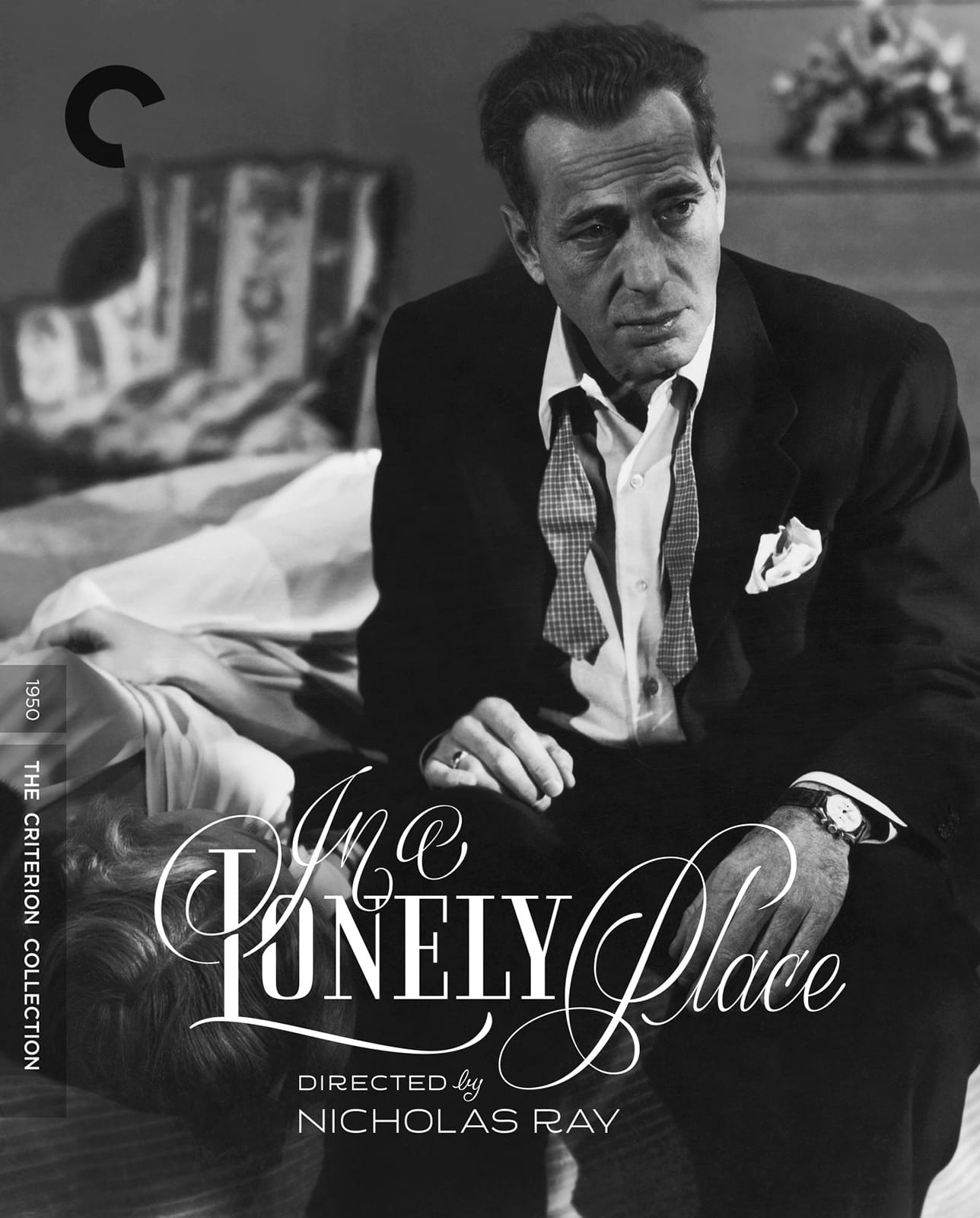
It's remarkable thinking that In a Lonely Place is 71-years-old this year. The older I get, the older classic Hollywood gets, and yet, many of their films never truly seems to age. They remain timeless, which, unfortunately, is more than can be said of many of our current day films that just sort of swirl down the drain and vanish into the sewers.
Go to my Classic Hollywood page to find all my Classic Hollywood reviews!
Bogart plays Dixon Steele, a screenplay writer in Hollywood, but one with a bit of a mad temper on him, and a propensity to loathe any of the books that directors want to hire him to adapt for the silver screen. One late night, he actually takes a cute little cloakroom girl named Mildred Atkinson (Martha Stewart) home for no other reason than she has read the book that he's been hired to adapt and he has no interest in reading it. So he brings her home so she can simply give him a rough synopsis of the story. She, of course, is suspicious of him at first, but then settles in eagerly to her storytelling. She finishes and he sends her home, or rather, around the corner to catch a cab, and he goes to bed, after making eye contact with his lovely neighbor across the way, Laurel Gray (Gloria Grahame).
Just a brief mention to the newly initiated, manga is supposed to read right to left (because manga is Japanese and this is how their language is penned). There is nothing wrong with the printing of the book even if it feels backward. There are instructions in the volume to help you read it correctly.
I've never read Anne of Green Gables, but I've watched the 1980s miniseries countless times so I know the story by heart and this darling manga captures the tale very well. The dialogue feels straight out of the miniseries, which as I understand it, is straight from the book. So great job there. The last 2/3 of the book felt rushed, but it's always possible that the original book moves along that fast too. As I said, I've never read it. All I know is that a "chapter" in Anne's life should be more than just a single manga page. I would have liked to see more of Gilbert Blythe, quite honestly, since he was so charmingly drawn.
The illustrations are overall of excellent quality and tell the story quite well with a few exceptions.
1) I'm not sure what to make of characters' eyes going almost black when they're stunned or dumbfounded? I read manga and I've never really seen that happen to the same extent it does here, so that was odd.
2) Continuity issues with Anne's hair. Marilla cuts it super short after she dyes it green and her braids are back to being super long a few months later. That's impossible. Also, as she matured, she would have started wearing her hair up, not in braids anymore.
I'm really loving the idea of Manga Classics so far. My sister gifted me a copy of Romeo and Juliet and it's just truly lovely. I plan to read more Manga Classics as they are released.
Overall, a lovely manga that feels fairly faithful to a well-beloved story and will undoubtedly entertain readers. I think it's marvelous knowing that this is the only manga adaptation of Anne of Green Gables sanctioned by the Montgomery estate. It's a high-quality offering and I hope they consider a follow-up volume of Anne of Avonlea.
Many thanks to Netgalley and Udon Entertainment for providing the free ARC copy. I was not required to give a positive review, all thoughts are my own.
I'm participating in the Valentine's Day Period Drama Blog Partyhosted by Heidi and I have so many ideas plunking around in my head that I just can't decide what to write!
I'm limiting myself to 5 possible choices and would love your vote for your favorite option(s)! And if you don't have an opinion or are good with me writing anything, then that's fine too.
What period drama would you like to see me tackle for the Valentine's Day Period Drama Blog Party?
1) The Phantom of the Opera- because I actually really love Patrick Wilson as Raul and Emmy Rossum is darling as Christine. It's such an interesting film because it gets some things right and some things oh, so wrong, but they definitely got Christine and Raul right.
2)Jane Eyre- the version from 1983 with Timothy Dalton and Zelah Clarke because this is MY version of Jane Eyre, a book I haven't even completely read yet. Isn't that dreadful?! But I absolutely adore this version of Jane Eyre. I used to think it was because of Timothy Dalton, but actually a lot of it has to do with Zelah Clarke. She is an adorably spunky version of Jane and she just pairs so brilliantly with Timothy. They've got intense chemistry.
3) The President's Lady - a movie from 1953 about future President Andrew Jackson and his scandalous courtship and marriage to divorcee Rachel Donelson. Such a beautiful movie and one of my favorite roles for Charlton Heston and my first introduction to Susan Hayward who is AMAZING. I adore it, a truly radiant film with a lot of thought put behind the production and casting choices.
4) Persuasion - the version from 1995 with Amanda Root and Ciaran Hinds because this is really the only version I like so far. I feel they got enough right with this one that it works, and Amanda and Ciaran are darling as Anne and Captain Wentworth. I love the scene where she reads his letter. The Austen heroes and their letters!
5) Lorna Doone - The version from 2000 because it is pure genius and I adore it. Lorna and John Ridd are ADORABLE. Beyond adorable, even. This was my first introduction to Richard Coyle and I've never looked back. The man is a delight. And they are so stinking cute together!
Phantastes is a peculiar little book. A little over 200 pages, it is like falling into a deep sleep and rambling through a fantasy world with very little cohesiveness to provide a substantial backbone or plot to the experience.
The reader follows the adventures of Anodos, a young man whose name is proclaimed maybe three times throughout the entire book so it is easy to forget. He uncovers a pile of rose petals in the desk of his recently deceased father and as he does so, a wizened old lady pops out of nowhere. She declares that on the morrow he will begin his journey in Fairy Land, since he had so wistfully read a fairy tale to one of his sisters the previous night and mused that there likely was a Fairy Land if one could only get into it.
Anodos awakens the next day to a stream in his bedchamber and lichen and grass and all sorts of things that don't belong and when he follows the stream, he finds himself out of his own home and country and now a wanderer in Fairy Land. For what else could it be?
Anodos finds that there are trees willing to help him and trees willing to harm him, that there are people who live on the borders of Fairy Land, some who realize it and some who do not. He meets actual fairies in the garden of a woman and her daughter who take him in for the night, and he sings awake a lady encased in alabaster that he finds in a cave and who escapes from him into the forest. He is betrayed by a youth and ends up in the home of an ogre where he foolishly opens the wrong door, one of infinity, and obtains for himself a permanent, black shadow. He stumbles into a fairy castle where he cannot see them but knows they are there and spends time reading fairy stories in their library. He battles three giants with two princely brothers and develops a swelled head about his might and prowess.
And ultimately, twenty-one days later, and he is twenty-one years old, Anodos winds up back home, rid of his dark and shadowy company of pride and arrogance, and a much wiser young man.
I barely touched on the basics of this story. As I said, it flows like a dream, one door leading somewhere that it can't possibly lead, and experiences that should not tie together being experienced as one. It's a very fluid sort of book as if George MacDonald truly just wanted to write about Fairy Land but did not want to incorporate something as corporeal as a plot.
I can't disagree with his choice. Phantastes is an enchanting, although not an easy, read and I enjoyed it immensely. I only understood a portion of it, like when you read Shakespeare for the first time and realize you need to read the play again, and possibly a third time, in order to grasp more and more of the meaning and intention of the author.
What I do know is that Anodos emerged from his adventure a far less selfish man than he was when he entered it. Once he begins to view himself through a window of humility, the nobler he becomes. Sacrifice is something he begins to understand, and he lets go of things his heart desires, like the lady in Alabaster, because she is not his to have.
For the curious, yes, it is easy to see how MacDonald inspired both J. R. R. Tolkien and C. S. Lewis. MacDonald paints vivid pictures in the mind that, just like with impressionist artists, are best understood when taking a few steps back in order to take in the whole picture. I didn't even know what I thought of Phantastes until the end when I could finally, fully start to experience the full picture.
Memorable Quotes from Phantastes
“It is by loving, and not by being loved, that one can come nearest the soul of another; yea, that, where two love, it is the loving of each other, and not the being loved by each other, that originates and perfects and assures their blessedness. I knew that love gives to him that loveth, power over any soul beloved, even if that soul know him not, bringing him inwardly close to that spirit; a power that cannot be but for good; for in proportion as selfishness intrudes, the love ceases, and the power which springs therefrom dies. Yet all love will, one day, meet with its return.”
“As in all sweetest music, a tinge of sadness was in every note. Nor do we know how much of the pleasures even of life we owe to the intermingled sorrows. Joy cannot unfold the deepest truths, although deepest truth must be deepest joy.”
“I learned that it is better, a thousand-fold, for a proud man to fall and be humbled, than to hold up his head in his pride and fancied innocence. I learned that he that will be a hero, will barely be a man; that he that will be nothing but a doer of his work, is sure of his manhood. In nothing was my ideal lowered, or dimmed, or grown less precious; I only saw it too plainly, to set myself for a moment beside it. Indeed, my ideal soon became my life; whereas, formerly, my life had consisted in a vain attempt to behold, if not my ideal in myself, at least myself in my ideal.”
“My spirits rose as I went deeper; into the forest; but I could not regain my former elasticity of mind. I found cheerfulness to be like life itself - not to be created by any argument. Afterwards I learned, that the best way to manage some kinds of pain fill thoughts, is to dare them to do their worst; to let them lie and gnaw at your heart till they are tired; and you find you still have a residue of life they cannot kill. So, better and worse, I went on, till I came to a little clearing in the forest.”
I was very kindly tagged for this by The Maidens of Green Gables. Thank you, ladies, I enjoyed it immensely! My nominees at the bottom of the list.
Here are your rules as set out by the originator of the tag, Emily of The Altogether Unexpected blog.
Answer every question honestly. (duh.)
Use as many gifs and images as possible.
Incorporate at least one YouTube video with a favorite scene of a character.
NO VAGUE ANSWERS ALLOWED. Explain why you chose that favorite character to fit that description. I love details, my friends.
If you can’t choose just one, that’s okay – give us a few answers and geek out if that’s what it takes.
Tag at least 3 people.
Use fictional characters from any fictional story.
If you get nominated and/or decide to participate in this tag, please put a link back to this post in your post and credit Emily of The Altogether Unexpected blog as the creator.
Have fun and obsess over fictional characters!
Goody-two-shoes: A character who was just so morally good (ELINOR DASHWOOD, SENSE AND SENSIBILITY)
Elinor Dashwood from Sense and Sensibility, both Jane Austen's novel and any of the films.
She is so insanely, painfully self-sacrificing. She is a woman who knows the limits of her family's finances, takes care of her mother and younger sister when they have melt-downs, and denies to herself her true love because he is engaged to another woman.
She will never push to take something for herself if it means harming someone else, and she even becomes an unselfish confidante to the fiance of the man she loves. It's a wonder she had a happy ending, but after going through all of her restraint where Edward is concerned, she deserved one and I'm so happy that Austen gave it to her. Elinor is so strong and so loving, one of my favorite of Austen's heroines alongside Anne Elliot and Catherine Morland.
Heartbreaker: A character who made you cry (NEWT, THE MAZE RUNNER)
Newt in The Maze Runner film series played by Thomas Brodie-Sangster. Newt might just be one of my favorite fictional characters of all time.
Sorry, folks, but there are some spoilers here. There was no way to avoid them.
The Maze Runner series is about a dystopian world where a disease has wiped out most of the adult population and their only hope in finding a cure is to put kids/teens who seem more resistant to the disease through a series of extreme tests. Newt is one of these teens.
Newt has a strong, yet highly forgiving nature. He's a leader in that as a follower of other leaders he makes wise choices in who he will follow. When there's a schism of leadership among the group of boys he's a part of, Newt takes the harder road by following new leadership. His choices lend strength to others who also choose to follow new leadership because Newt led the way. It turns out he was right.
In The Death Cure, the audience is subjected to watching Newt slowly deteriorate because he's been exposed to the disease. It's one of the hardest half hours I've ever subjected myself to and I will never forget the floods of tears I experienced BOTH TIMES I saw The Death Cure in the theater. Newt is such a selfless character at the end of his journey, definitely in keeping with who we know him to be, but also in ways that require superhuman strength to put his own wellbeing aside and fight for the safety and wellbeing of others. That fight he has with Thomas (leader and best friend) at the end BROKE MY HEART.
I was an absolute mess. And I still have a necklace with Newt's name on it as a reminder of that brilliant performance by Thomas Brodie-Sangster. It probably helps that he's British since I'm a sucker for British actors, always have been.
Ironically this video does not have Newt in it. But it is his voice narrating a letter he wrote to Thomas, his best friend, and is one of my favorite scenes. It does contain spoilers since it's at the very end of the last movie so if you've never watched the series and think you someday might, you may want to skip watching this now.
Parrot: A character who won’t stop talking (HYACINTH BUCKET, KEEPING UP APPEARANCES)
Hands' down, it is Hyacinth Bucket (pronounced Bouquet according to her) from the 1990s British television program Keeping Up Appearances.
Hyacinth never lets anyone else get a word in edgewise under any circumstances because everything she has to say is so important and nothing anyone else says is of any importance at all.
There's a scene in, I think, the 5th season where her husband, Richard, is going to take her to a country house sale (like an estate sale), and he's saying one thing in a panic and she repeats it right back to him with excitement as if he never spoke.
Richard: Somehow you think that if something has been owned by the aristocracy then it must be worth twice as much.
Hyacinth: You know, I think that if something has been owned by the aristocracy then it must be worth twice as much!
She's hilarious and obnoxious and it's one of my favorite sitcoms.
Devilish: Your favorite villain (FRANK LANGELLA AS DRACULA)
Frank Langella as Dracula in the 1979 film.
Yes, I'm being this specific because Langella's performance was all about sensuous magnetism. He took a somewhat cheesy, corny role and turned it into a desirable one. It helps that the casting choice for their Jonathan Harker made the so-called hero the least likable man on the planet. Compared with Jonathan, Dracula was a saint. He has this polite demeanor that is actually genuine where women are concerned. He's gentle and respectable and very, very Victorian, unlike Jonathan who likes to push the boundaries and is a jealous, pompous jerk.
Here's a really lovely music video from Dracula 1979. It has some sensuality, but no nudity.
Love interest: A character who, if alive in reality, you would want to marry (PEETA MELLARK, THE HUNGER GAMES)
Peeta Mellark from The Hunger Games trilogy.
He's stable and steadfast. It's hard in the books because they're just from Katniss' perspective, and so we see Peeta through her eyes, just like with Harry Potter and Snape.
What I see when I look at Peeta is someone who risked a beating from his mother to give away some bread to a girl he barely knew but who he could see was starving. He's also a person who knew he needed to adapt to stand even a chance of survival in the Hunger Games and did it, all without losing his soul. He's a charmer and people can't help but like him, the complete antithesis of Katniss. Peeta stays himself except for the intense cruelty of Mockingjay where he's been brainwashed to see Katniss as an enemy.
He's deeply sacrificial, gentle, and gives of himself completely to Katniss. His love for her was real long before hers for him ever began to blossom, but he waited her out. Peeta is a beautiful, radiant character in both the books and the films, and he would make any woman a worthy, safe, steadfast husband.
Sidekick: A character who was always loyal no matter what (ARTHUR HASTINGS, AGATHA CHRISTIE'S POIROT)
Arthur Hastings, sidekick to Agatha Christie's Hercule Poirot in the best-kept traditions of being Watson to Sherlock Holmes.
I've yet to read a Poirot novel, but I have watched the David Suchet miniseries countless times and I hear that it's fairly close to Christie's creation.
Hastings is a sweet man, always upbeat and positive, always ready for a lark and an adventure. He thinks of his friends first, which is usually more than can be said of Poirot, Lord love 'im. Hastings is the one who will never ever crack the case wide open, but he is the one who will chase the criminal down, run errands, file paperwork if Poirot's secretary Miss Lemon is out of town, and just be a supportive presence to the great and magnificently pompous, Hercule Poirot.
He's also never afraid to speak his mind, and if he thinks that Poirot is being absurdly prideful, he will actually speak up. Like in The Mystery of the Spanish Chest when Poirot is being particularly puffed up and not at all humble, and Hastings tries to remind him that humility is a virtue.
Which of course, backfires just a smidge when Poirot lets a compliment slide off his back and Hastings praises him for his restraint.
Poirot: I am learning, Hastings. It is more English, yes, the humbleness? So, I am learning. I shall be the most humble person in the world. No one will match Hercule Poirot for his humbility.
Hastings is an excellent companion and an unfailing support to Hercule Poirot.
Complicated: A character you love and hate (SEVERUS SNAPE)
Severus Snape, books or films, it doesn't matter.
He's clearly on the side of right after Lily Potter's murder, works with Dumbledore, and does all the right things, including trying to save Harry's life in The Philosopher's Stone when Professor Quirrell is trying to kill Harry on the Quidditch field.
But he's such a JERK about almost everything! He's cold and cruel and underhanded in a very childish way towards Harry and his friends.
BUT, I also know that we see Snape through Harry's not-so-clear glasses. Harry, bless 'im, is an unreliable narrator, so we, the reader, have no idea what Snape is truly like. All we know is that, according to Harry, he's hateworthy, only I never truly hated him.
If you want more of my thoughts regarding Severus Snape, you can read my In Defense of Severus Snapeblog post.
Oddity: A character who was strange, but you loved them that way (ODD THOMAS)
This would have to be Odd Thomas, both the book character by Dean Koontz and the film character portrayed by Anton Yelchin before his untimely death (rip).
Odd (that's his first name) sees ghosts. And they see him. He even had the ghost of Elvis wandering around him for a while. The ghosts don't speak, but they usually have some unfinished business they want Odd to assist them with. He's a very kind-hearted, gentle soul, compassionate and sweet. I only read the first 2 books in the series, but I love him. Anton did a great job portraying him in a movie that didn't quite do the story of the first book justice, but is a better adaptation than quite a few of Koontz's book to film tales.
Queen/King: A female/male character who you admire and aspire to emulate
Sara Crewe from Frances Hodgson Burnett's A Little Princess, a book I absolutely adore.
This child is remarkable.
Born into privilege, cast down to the lowliest of the lows through circumstance, spit upon, abused, and despised by those around her, and yet her imagination and hopeful spirit are indomitable. She takes on so much more abuse than anyone should have to handle and she does so with a gracious spirit. She is a princess, yes, but only because all girls are princesses. Because you see, princesses care for the weak and see their value.
My favorite film version is from 1995 which I think they got maybe 90% right, and what they did change, like allowing Sara's father to live, I can completely support. The story is beautiful and heartbreaking and Sara shines as an example of mercy and compassion and loving one's neighbor, reminding me of who I should try to be.
Savior: A character who oddly reminds you of Christ (P. T. BARNUM, THE GREATEST SHOWMAN)
P. T. Barnum in The Greatest Showman! Now, yes, he was a real man, but as I understand it, about 20% of this movie is actually true, so it's pretty much fiction, which is why I'm using him.
I know, I know, it sounds crazy (and if it's crazy, live a little crazy), but from the very first moment, he reminded me of Christ. There's this spark of magnetism about him, this call to people to follow him, that he wants to offer them a better life free of the shadows plaguing them.
I mean, come on, just the lyrics to Come Alive are a call to living fully, stepping out of the darkness and into the light and never looking back at who we were before!
Come alive, come alive
Go and light your light
Let it burn so bright
Reaching up
To the sky
And it's open wide
You're electrified
When the world becomes a fantasy
And you're more than you could ever be
'Cause you're dreaming with your eyes wide open
And you know you can't go back agin
To the world that you were living in
'Cause you're dreaming with your eyes wide open
So come alive!
Then there's The Other Side with Barnum and Carlyle. It was another mind-blowing moment of Christ calling followers to find freedom, break out of their cages, and follow Him because his burden is so much lighter.
I'm sure the writers for The Greatest Showman never imagined the comparison, but it shines so brightly to me. Barnum reaches out to the unlovely of society, the unloved, and he takes them in and gives them hope and a future. Of course, the comparison ends at some point because Barnum loses his way for a bit, but still, the message is there.
I nominate the following folks (and anyone else who wants to participate: