Showing posts with label classic movies. Show all posts

“How to Murder Your Wife” (1965): A Mixed Bag of Laughs and Cringe

Wednesday, October 1, 2025

Jack Lemmon shines as Stanley Ford, a lifelong bachelor cartoonist whose drunken antics and reluctant plunge into marriage drive this dark comedy. The film’s humor hinges on his physical comedy—think expanding waistlines from Italian cooking and lightbulb-electrocution mishaps. His habit of acting out comic strip scenes before drawing them adds genuine laughs, showcasing Lemmon’s genius.


The Good: Vintage Lemmon

  • Physical comedy gold: Slapstick moments (like the infamous lightbulb scene) highlight Lemmon’s talent.
  • Creative flair: Reenacting comic strip scenarios blurs fiction and reality in clever, absurd ways.
  • Charming chemistry: Virna Lisi’s character softens Stanley’s edges, offering glimmers of genuine connection.

The Dated: 1960s Gender Dynamics
The film’s “battle of the sexes” premise hasn’t aged well:

  • Misogyny as punchlines: Women are reduced to objects (bachelor parties turn wakes for “lost freedom”) or manipulators.
  • Marriage as imprisonment: The mustache-growing rebellion feels tragic, not funny, in today’s context.
  • Scantily clad stereotypes: Lisi’s wardrobe choices prioritize male gaze over character depth.

The Uncomfortable: Mutual Manipulation
Both genders weaponize distrust:

  • Stanley’s friends celebrate freedom when weddings collapse.
  • Wives use emotional blackmail (no motorcycles, no mustache, no independence).
  • The title’s dark premise—fantasizing spousal murder—feels jarringly mean-spirited.

Verdict: A Time Capsule, Not a Blueprint
While How to Murder Your Wife offers laughs through Lemmon’s brilliance, its gender politics clash with modern values. It’s best viewed as a cultural artifact—a reminder of how far we’ve come (and how far we still need to go) in portraying mutual respect in relationships.

Rating: ⭐️⭐️⭐️ (for Lemmon) / ⭐️ (for messaging) 

Read More

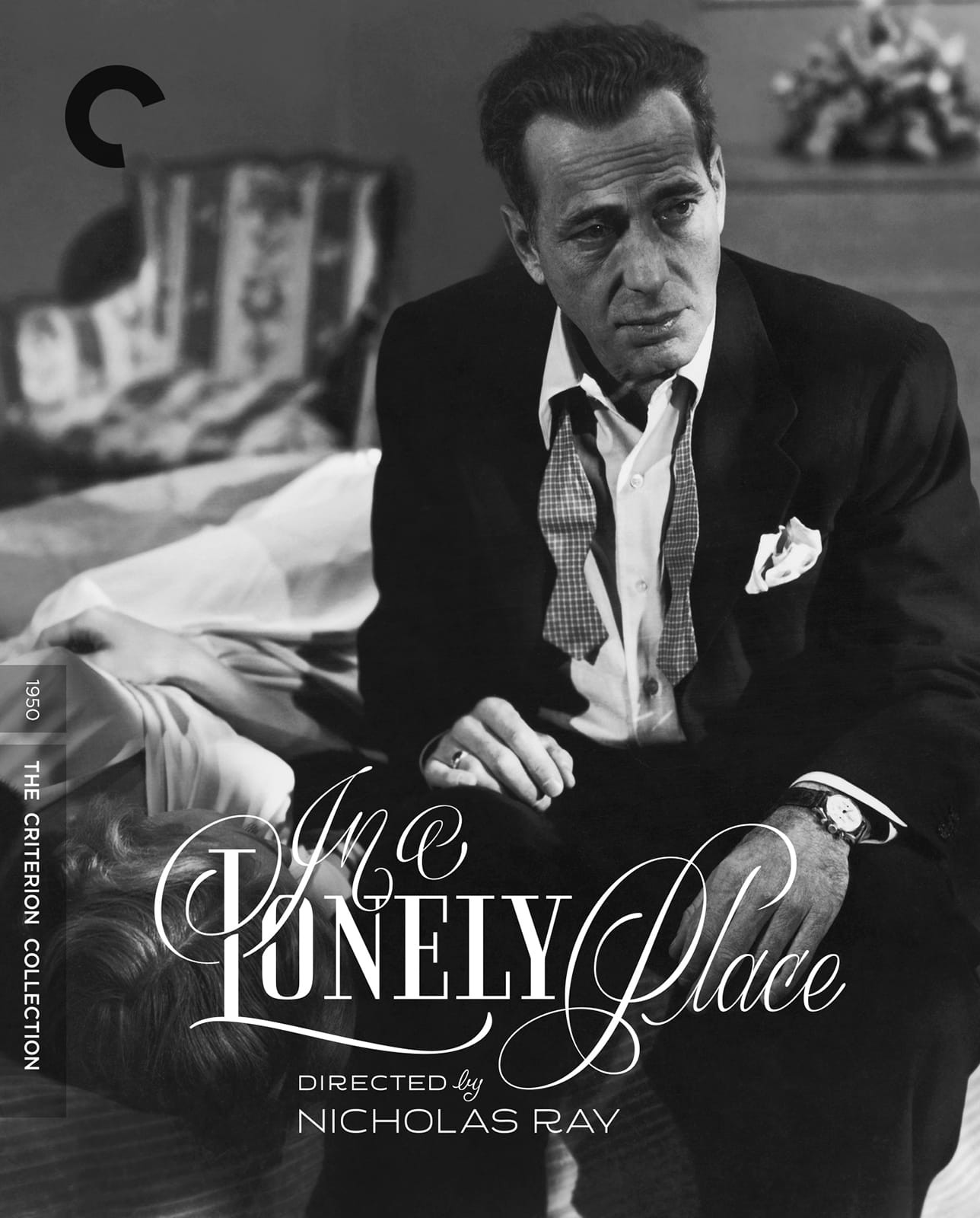
Humphrey Bogart stars in "In A Lonely Place" (1950)

Sunday, January 31, 2021

It's remarkable thinking that In a Lonely Place is 71-years-old this year. The older I get, the older classic Hollywood gets, and yet, many of their films never truly seems to age. They remain timeless, which, unfortunately, is more than can be said of many of our current day films that just sort of swirl down the drain and vanish into the sewers.

Go to my Classic Hollywood page to find all my Classic Hollywood reviews!

Bogart plays Dixon Steele, a screenplay writer in Hollywood, but one with a bit of a mad temper on him, and a propensity to loathe any of the books that directors want to hire him to adapt for the silver screen. One late night, he actually takes a cute little cloakroom girl named Mildred Atkinson (Martha Stewart) home for no other reason than she has read the book that he's been hired to adapt and he has no interest in reading it. So he brings her home so she can simply give him a rough synopsis of the story. She, of course, is suspicious of him at first, but then settles in eagerly to her storytelling. She finishes and he sends her home, or rather, around the corner to catch a cab, and he goes to bed, after making eye contact with his lovely neighbor across the way, Laurel Gray (Gloria Grahame).

Read More

Poitier: A Patch of Blue (1965)

Monday, July 8, 2013


Selina and Gordon sharing a moment of tenderness

Even today interracial couples get the curious eye from folk who need to keep their noses out of it. But in 1965, tensions could erupt at the drop of a hat if a white girl liked a black boy. Such is the story of A Patch of Blue except this time the white girl is blind and from the wrong side of the tracks, and the black boy is highly educated and on his way up the business ladder.  When Gordon Ralfe (Sidney Poitier) meets blind Selina (pronounced Slina by her family) in the park, stringing beads for extra income, he is intrigued by her. On a whim, he purchases a pair of sunglasses to hide the gentle scarring around Selina’s eyes (he’s the first one to pronounce her name as SeLIna). And so begins the kindest relationship Selina has ever known.

Her mother, Rose Ann (Shelley Winters), is a brutish woman who works Selina to the bone, and whips her with a rag if she is late preparing supper or cleaning the laundry. Selina’s grandfather, called Ole Pa, is little better because, although he cares about Selina, he is a terrible drunk and, while not as mean as Rose Ann, he’s disgusting in his drunken state. It’s only natural that Selina would fall in love with Gordon, a man who not only shows her kindness, but teaches her how to be self-reliant, how to reach the pay phone near her house if she needs him, how to count steps across the intersection, what sounds are called, etc. And she does not realize he is black, at least not until the end, and even then, it doesn’t matter, and why should it?

If the movie were made today, I think Poitier’s character would have been the main character. As it is, Selina, played by innocent Elizabeth Hartman, is the lead, almost as if they were afraid to give Poitier too much screen time. I would have loved for the film to have been from his perspective because, even as it is, the audience senses his frustration with Selina’s situation. I would have liked to see him away from her in more scenes, considering, contemplating, see his home life, why he is torn about his emotions regarding Selina. There’s a little bit of this, but not enough. Still, they did the best they could with the era available to them, and the intimate kiss shared between Selina and Gordon is intensely sweet and ground-breaking.

A Patch of Blue is a hard movie to watch, but is listed in my top twenty movies of all time anyway. Selina is much abused and what’s more, she’s content in it. This is what makes the ending all the more poignant. The director, Guy Green, admits in the commentary that they left the ending deliberately ambiguous, but with a tinge of hope that everything was going to turn out all right. That is the most irritating aspect of classic film, those endings that aren’t really an ending, with everything neatly wrapped up with a bow. I love having no loose ends, but that’s not the way classic cinema rolls.

As for Poitier, this is one of his forgotten films, and I can’t figure out why. Sure, he’s not playing Mr. Tibbs, the character for which he is most remembered, but he masterfully tackles the role of Gordon Ralfe, taking an already likable character and making him transcend race. Gordon’s guilt over his feelings for Selina is touching and accurate for the era. What’s even more beautiful is the scene where she tells him she knows he’s black, and thinks he’s beautiful anyway, her hands on his cheeks, smiling up at him. And the look in his eyes, such tenderness, such love. Poitier is at his best in this film and even though he is not the lead, he is the leading man. He is the patch of blue in her life, the one color Selina can remember before acid stole her sight at the age of five.
Read More

What I do when I'm sick . . .

Wednesday, May 30, 2012


I'm sick.

Or have hay fever.

It's one or the other but regardless of WHAT it is, the last several days have been horrendous. More so because it was a holiday weekend and I was schedule to work the day after the holiday so I had to go to work. My boss was kind enough to schedule me for only a half day (which I really, really appreciate) but by the end of the night I was completely dragged out and only wanted to go home. Which I did, finally.

But, on the positive side, I had a chance to rewatch some old movies that I haven't seen in forever. Of course by old I mean classic 9 times out of 10. So I spent most of one day watching the original Tarzan film with Johnny Weissmuller and then the 3rd film in that series Tarzan Escapes. That last one isn't my favorite and I really wish I'd watched the 2nd one instead. Maybe tonight once I'm off work. Except Tarzan bellowing is a bit loud for night-time viewing when the rest of the family sleepeth. There's nothing quite like Tarzan and Tarzan and His Mate. They were filmed before censorship so Jane's costume in the 2nd film is quite risque and the newest DVD release even included the swimming scene where she's not wearing a stitch of clothing. But I love them anyway. Somehow they feel like classic cinema at its rawest and best form.

Then of course there's my foray into modern comedy. Sister Act was a must. I'd forgotten that Maggie Smith played the Reverend Mother and I'd also forgotten how much I LOVE her. That woman is in acting genius and a marvel and when she passes her death will be a great loss to society. Then for the 1st time in at least 5 years I watched Sisterhood of the Traveling Pants. Maybe I'm old enough to appreciate it now because I wasn't that fond of it when I first saw it. This time around I loved it. It warmed my heart with its authenticity and sympathy for these teen girls who all have their own set of problems. I think I also appreciated how not all of the girl's situations revolved around boys. It's not all about the guys, people, and it's nice having movies remember that.

Then (remember I've been sick or I'd never have watched this many movies) I plugged in my edited copy of Keeping the Faith. There's a good chance 95% of you have never seen this movie. It's the obscurest of the obscure but kinda cute in its own unrealistic, melodramatic way. The movie stars Edward Norton as a priest and Ben Stiller as a Rabbi in modern New York City. They're innovative in their preaching methods and what's more they've been best friends since they were in 8th grade, which is also where they both met the girl of their dreams. Except she's the same girl. Long story short, they've all grown up and she moves back to New York for a job. Both men fall in love with her again (yes, even the priest) and we watch how the drama unfolds. The moments of humor are hilarious and I love Ed Norton.

Spoiler Alert:

Which is why, regardless of the fact that he's a priest, if Priestly Ed Norton confessed his undying love to me, it would be reciprocated! You have a choice between kissing Ben Stiller and kissing Edward Norton? Uhm, not a hard decision to make! Sheesh, that girl's not nearly as practical as me!

So, there you have it. A totally fluffy post of my recent movies. I almost never write these types of posts so don't worry about them getting to be a habit. In fact I usually dislike talking about my recent movie-viewing habits since it does seem petty to talk about. Eh, one time won't hurt. My next post should be more substantial. Once my sinuses have cleared up enough so thinking doesn't feel like I'm using up oxygen.


Read More

The Salvation of Thomas Becket: Thoughts on the film Becket (1964)

Monday, February 15, 2010


"Wherein doth sit the dread and fear of kings, but mercy is above the sceptered sway. It is enthroned in the heart of kings and earthly power doth then show likest God's, when mercy seasons justice." ~ William Shakespeare

What defines the measure of a man? It is usually his actions over some long period of time that define him. Where Thomas Becket, confidant to Henry II, was concerned, he was nearly as corrupt as his king. When the king caroused, so did he. When the king required female companionship, so did he. And when the king required something of him, Thomas did it, unquestioningly. One would think this man to be irredeemable. Except that no one is irredeemable. It may take years to find God, or it may take only a single moment to make a choice. In the case of Thomas Becket, it only took a moment. Thomas Becket loved his king, as much as he was capable of loving anyone. He and Henry were so close that it irked Henry's wife and mother to no end. When Henry needed consoling, he went to Thomas. When he needed friendship, he went to Thomas. And when he needed someone to manipulate, he went to Thomas. All because Thomas understood that he could do nothing to change the king.

Ironically, it was Henry's manipulative nature which finally cured Thomas of his placatory behavior. In one fell swoop, the Archbishop of Canterbury died. Henry conceived a magnificent plan to have a new Archbishop placed, one who would support him. And who better than his oldest and dearest companion, Thomas Becket? It was the biggest mistake of Henry's life and the best thing that could have happened to Thomas. Becket was suddenly thrust into a religious life. He had always experienced a great respect for God. But it wasn't until Thomas Becket received the robes of Archbishop that he began to seriously consider the state of his immortal soul. All that time he spent with Henry, he was trying to earn his king's respect and love. And Henry did love him. But it was a selfish and manipulative love that did Thomas Becket no good.

Suddenly, Thomas realized that trying to honor Henry wasn't working. He couldn't reconcile himself to the two warring factions within his own heart. It was a fruitless labor and one that only brought a deep dissatisfaction. One day, as he knelt before the altar, Thomas Becket found God. And everything changed. In one fell swoop, Henry II lost not only his confidant but his closest friend and ally. Richard Burton's Becket said it best, "He has not yet forgiven me for choosing God over him." Just as Becket found peace, both with himself and with God, Henry II watched his world be torn apart. Love. How does love appear when it refers to men loving men without sexuality playing a role? Some make the claim that Henry II was in love with Thomas Becket. I utterly deny that point. Women were for sex and Henry II loved his women. Men were for love and respect.

Thomas was the best, honest, and most trustworthy man Henry ever knew and he gave him his love utterly and completely. It had nothing to do with sexuality, but of two people bonding as if they were brothers, or even closer than brothers. When Thomas realized his fulfillment was through God and not the king, it broke Henry's heart. All Henry ever desired was Thomas' good opinion and support. When that was stripped from him, he reacted as a man suddenly desolate. Women gave him pleasure, but Thomas stimulated his mind. There is a moment in "Becket" that is extremely poignant. Henry is now conceiving ways to wreak vengeance upon his former friend. He speaks with his barons, the most trusted men in his realm outside of Thomas Becket. All of a sudden, Henry clutches his heart. He cries out in realization that despite the pain and anger and hatred, a part of him still loves Thomas Becket and grieves for the loss of their friendship. He falls upon the floor and utterly weeps as the immense loss washes over him. His weakness lasts only a moment. He then utters the quote that most people recognize, "Will no one rid me of this meddlesome priest!"

And this serves up Thomas Becket's death sentence. The barons take Henry seriously and martyr Thomas Becket. Henry lifts his head from the table where he collapsed as his men leave to commit their crime and he murmurs, "Thomas." There is no way to tell whether Thomas Becket's religious actions as Archbishop really stemmed from religious fervor or from ambition to steal Henry's power. But this film presented a man already torn in two directions by Henry and who finally decided that he needed God's approval more than man's.

Regardless of reality, the Hollywood story of Thomas Becket moved me to tears. He was indeed martyred and made a saint by the same man who pronounced his death sentence. Thomas Becket is living proof that a man can commit horrible, unclean, and perverse acts and yet still emerge as a child of God in the end due to a contrite heart. No man is perfect, Thomas Becket least of all. But he gives us hope that if he can be saved, so too can any man. If people only focus on their imagined vision of homosexuality in "Becket" then they've missed the point. This film isn't about Peter O'Toole or Richard Burton and their remarkable talents. It's about a single man who learned that he no longer needed to please man but only God. And that's something worth seeing.

Cautionary Warning: This film does contain some sexual content and brief partial nudity of a woman. The story couldn't have been told accurately otherwise.
Read More

Thoughts on Lawrence of Arabia

Friday, February 12, 2010


As Lawrence sets out across the desert with Daoud and Faraj. 
Auda abu Tayi: You will cross Sinai?
T.E. Lawrence: Moses did!
Auda abu Tayi: And you will take the children?
T.E. Lawrence: Moses did! 

What do you do when you come to the end of your rope? You either allow yourself to fall or you start pulling yourself up one painful handhold at a time. In the world of T.E. Lawrence, he reached the end of his rope. And he simply wanted to fall. An arrogance proceeded Lawrence throughout his tour in Arabia. He believed he could do anything and emerge unscathed. At least, until he was captured by the Turks. Than he found he was just a man and like any other man could be harmed, even killed. Lawrence found himself dangling on the end of that rope. It's not a pleasant thing to face mortality head-on. The young are especially gifted with thinking themselves immortal. I'll never die so I will ride motorcycles as fast as I can. I'll experiment with drugs, alcohol, and other vices because they can't hurt me. I'm young and infallible. If only this were the truth. But it's not the truth.

Lawrence was a remarkable man with many feats of bravery to his name along with many acts of foolishness. How often are we like T.E. Lawrence? We enter a situation, fully confident in ourselves and needing no outside help. Only to find that the outside help might just be the thing that saves us. I never want to reach the end of my rope and actually consider falling. Lawrence was placed in a situation so heinous that he found no other way. The fall didn't kill him, not yet, but that act of mentally giving up certainly left its mark on him. There will never be a time black enough to make giving up an option. It can be so hard to pull yourself up, but once you've done those first few pulls toward freedom, there are always hand to help you the rest of the way. They may be human hands, but more likely, they are the hands of a Savior. Watching Lawrence of Arabia was a remarkable event for me. It opened my eyes, not only to an amazing cinematographic achievement, but to the weaknesses found in everyone. Lawrence's adventures might have been singular, but his struggles, his failings, and his choices were not. In a way, I am T.E. Lawrence. It is for me to decide whether to give up living because of bad circumstances, or to fight my way through to the end.

It may seem foolish, but I wish I had been there to help the real Lawrence fight through his struggles and emerge the victor. I wish I'd been there, to comfort, and listen, and understand. Everyone needs a comforter. Mine is found in both close friends and in my Savior. Lawrence really had no one. And that's the shame of it.
Read More