Showing posts with label classics. Show all posts

Great Expectations: Time Marches On

Tuesday, February 21, 2023

Time is cruelty for Miss Havisham, the eccentric owner of Satis House in Charles Dickens’ fine novel Great Expectations. The progression of time drives her mad; to protect what little sanity she has left she must stop time’s progression. It’s impossible to do so. Time is powerful and in its willful determination to do as God dictates, Miss Havisham leads a fantasy life where she protects herself from the hurt of abandonment.

Wronged by her fiancé, Miss Havisham locks her doors, leaves the wedding feast on the table, and commands that all her clocks be stopped. Time is not permitted to work. Yet there is something in the saying that time is the great healer. It allows wounds to scab over and scar. The memory of the hurt remains, but the pain is gone. Time heals those wounds, but when Miss Havisham stops time for herself, she stops the healing process. There is no progression for Miss Havisham. Instead, she locks herself into the memory of the wrong done her, scraping off the healing scab every single day in order to feel the pain afresh.

Read More

Classics Club Read: And Then There Were None (1939) by Agatha Christie

Wednesday, July 21, 2021


Read for two challenges, my participation in The Classics Club and my own Agatha Christie Project that is a bit of a slow starter, but I'm determined to focus on more in 2022.

As almost everyone knows, this book has had multiple titles since it was penned in 1939. I am going with the least offensive title And Then There Were None, which actually makes the most sense and is the most foreboding of the various options.

I love Agatha Christie.

She was a clever woman who created four of the most iconic crime fighters/spies/detectives in the history of literature. I am, of course, speaking of Hercule Poirot, Miss Jane Marple, and Tommy and Tuppence Beresford.

But Agatha Christie did write novels separate from her most popular characters, and that's where And Then There Were None falls.

The basic gist is something akin to Clue, wherein ten people are invited under various pretexts to an island off the coast of Devon, known as Indian Island. Once there, these people quickly find that they are not on a jolly holiday, but rather, are being held accountable for murders committed by each of them at varying stages in their lives and for any number of reasons, including jealousy, carelessness, or pure neglect.

Read More

And the Classics Club Spin Winner is . . .

Monday, July 19, 2021


I am not very excited about reading Tender is the Night since I think it will be depressing, BUT at least I'll get it read and out of the way. Fitzgerald is usually hit or miss with me, but I've never read this book which is why it ended up on my list. At least it's not very long so that's a plus, and I was able to pick such a glamorous book cover for this blog post. I have no idea what book cover I'll get when I order a copy from the library.

Read More

Classics Club: Fahrenheit 451 by Ray Bradbury (1953)

Friday, April 23, 2021

Read for The Classics Club. You can find my reading list HERE

Fahrenheit 451 . . . the temperature at which books burn. 

I seem to drag Fahrenheit 451 out of the old bookshelf every 7 years or so for a re-read, forgetting many of the book's details in the years in-between. The story always surprises and terrifies me, even more so with this particular re-read due to the current infestation of "cancel culture" and self-imposed "censorship" in my society.

And before anyone asks what I mean by censorship, know that I am NOT in favor of letting sex and violence run wild in the streets (and on our screens). Ironically, sex and violence seem to be the only thing NOT censored anymore. I don't mean permitting and encouraging and praising every kind of depravity. I hope and pray that there is still moral decency left in mankind, although it's dwindling fast. And it will dwindle faster if the brakes aren't applied quick.

No, when I say that I hate censorship, I mean that I hate when only one side of an argument is allowed to be presented. Freedom and liberty is the ability, no, the permission given, to present both sides of an argument or a theory. Where the pros and cons to a topic are given equal talking time without having one side shouted or "canceled" out of existence by the opponent. The canceling what we don't want to hear or throwing modern "morality" in the faces of historic authors/public figures is what I hate the most. You like spitting on your ancestors and their mistakes with your hypocrisy and judgment? Wait 100 or 200 years into the future and see how you like your descendants spitting on you because you weren't clairvoyant enough to suit them.

Off the soapbox and on to the book.

Dystopian stories are almost NEVER happy ones.

Doesn't that strike you as odd? 

They're always tragedies where the world has gone insane due to one group's mismanagement or increase in political power that always strikes down freedom of thought, speech, religion, etc. Our poor fireman, Guy Montag, can't even remember where he met his wife, at least, not until the end of the book. He gets up at night, goes to work, drives with the other firemen to wherever an individual has been reported to own books, burns their home down, and returns to the firehouse to wait for another report. He goes home, wondering if his wife will have overdosed on sleep aids again and need her stomach pumped, then lies in his bed, separate from his wife's, and listens to the not so silent stillness that is broken by the seashells in her ears constantly pumping in data, data, data to her overstimulated mind.

And the books, always the books. Before he even knew it, he'd snatched a couple, and then more, and more besides until there's a tidy little hoard in the heating vent just waiting to catch him up. There's Clarice the girl next door who still looks up and around at the world and whose family still sits on their front porch laughing and conversing. She wakes him up, this 17-year-old kid, and once Montag is awake there is no returning, not even at the command of his fire captain, Beatty, or the desperate pleas of his wife, Mildred. He has one old professor, Faber, on his side at the end of all things.

The war begins, Montag against Beatty, a desperate flight for his life, a real war that wipes out towns, and the promise that maybe someday the world can return to a place of respect where history and stories aren't rewritten just because they're inconvenient or might hurt somebody's feelings.

The book itself is not a quick read for me, despite being less than 200 pages. 

I spent maybe 3 weeks reading it, 10 or so pages snatched here and there, until I finally blazed through the final 30 pages, including the afterword and the coda. If you've never picked up a copy with those letters to the general idiotic public and publishing houses, then you should find one. They're worth reading because Bradbury literally didn't give a damn about censorship or that he might offend somebody. He was who he was and he wrote what he wrote, and anybody who didn't like it can go write their own stories instead of trying to mess with his. Or they can go boil their heads, he definitely gave that impression too.

Everyone should read this book. I don't care if you like it or not. Fahrenheit 451 is a book that MUST be read.

"Frightening in its implications . . . Mr. Bradbury's account of this insane world, which bears many alarming resemblances to our own, is fascinating."  - The New York Times

Favorite Quotes from Fahrenheit 451

"You're afraid of making mistakes. Don't be. Mistakes can be profited by. Man, when I was younger I shoved my ignorance in people's faces. They beat me with sticks. By the time I was forty my blunt instrument had been honed to a fine cutting point for me. If you hide your ignorance, no one will hit you and you'll never learn." - Faber, Fahrenheit 451

"Remember that the Captain belongs to the most dangerous enemy to truth and freedom, the solid unmoving cattle of the majority. Oh God, the terrible tyranny of the majority." - Faber, Fahrenheit 451

"There was a silly damn bird called a phoenix back before Christ, every few hundred years he built a pyre and burn himself up. He must have been first cousin to Man. But every time he burnt himself up he sprang out of the ashes, he got himself born all over again. And it looks like we're doing the same thing, over and over, but we've got one damn thing the phoenix never had. We know the damn silly thing we just did. We know all the damn silly things we've done for a thousand years and as long as we know that and always have it around where we can see it, someday we'll stop making the goddamn funeral pyres and jumping in the middle of them. We pick up a few more people that remember every generation." - Granger, Fahrenheit 451

"Someday we'll remember so much that we'll build the biggest goddamn steamshovel in history and dig the biggest grave of all time and shove war in and cover it up." - Granger, Fahrenheit 451
Read More

Manga Classics: L. M. Montgomery's Anne of Green Gables (2020)

Friday, January 29, 2021


Just a brief mention to the newly initiated, manga is supposed to read right to left (because manga is Japanese and this is how their language is penned). There is nothing wrong with the printing of the book even if it feels backward. There are instructions in the volume to help you read it correctly.

I've never read Anne of Green Gables, but I've watched the 1980s miniseries countless times so I know the story by heart and this darling manga captures the tale very well. The dialogue feels straight out of the miniseries, which as I understand it, is straight from the book. So great job there. The last 2/3 of the book felt rushed, but it's always possible that the original book moves along that fast too. As I said, I've never read it. All I know is that a "chapter" in Anne's life should be more than just a single manga page. I would have liked to see more of Gilbert Blythe, quite honestly, since he was so charmingly drawn.

The illustrations are overall of excellent quality and tell the story quite well with a few exceptions. 

1) I'm not sure what to make of characters' eyes going almost black when they're stunned or dumbfounded? I read manga and I've never really seen that happen to the same extent it does here, so that was odd.

2) Continuity issues with Anne's hair. Marilla cuts it super short after she dyes it green and her braids are back to being super long a few months later. That's impossible. Also, as she matured, she would have started wearing her hair up, not in braids anymore.

I'm really loving the idea of Manga Classics so far. My sister gifted me a copy of Romeo and Juliet and it's just truly lovely. I plan to read more Manga Classics as they are released.

Overall, a lovely manga that feels fairly faithful to a well-beloved story and will undoubtedly entertain readers. I think it's marvelous knowing that this is the only manga adaptation of Anne of Green Gables sanctioned by the Montgomery estate. It's a high-quality offering and I hope they consider a follow-up volume of Anne of Avonlea.

Many thanks to Netgalley and Udon Entertainment for providing the free ARC copy. I was not required to give a positive review, all thoughts are my own.

Anne of Green Gables

Original Author: L. M. Montgomery

Author: Krystal Chan

Artist: Kuma Chan

Year: 2020

My Rating:  ★★★★

Read More

Classics Club: Phantastes - A Faerie Romance by George MacDonald (1858)

Wednesday, January 27, 2021

Phantastes is a peculiar little book. A little over 200 pages, it is like falling into a deep sleep and rambling through a fantasy world with very little cohesiveness to provide a substantial backbone or plot to the experience.

I read Phantastes for the Classics Club, specifically for Classics Club Spin #25. You can find my Classics Club list HERE.

The reader follows the adventures of Anodos, a young man whose name is proclaimed maybe three times throughout the entire book so it is easy to forget. He uncovers a pile of rose petals in the desk of his recently deceased father and as he does so, a wizened old lady pops out of nowhere. She declares that on the morrow he will begin his journey in Fairy Land, since he had so wistfully read a fairy tale to one of his sisters the previous night and mused that there likely was a Fairy Land if one could only get into it.

Anodos awakens the next day to a stream in his bedchamber and lichen and grass and all sorts of things that don't belong and when he follows the stream, he finds himself out of his own home and country and now a wanderer in Fairy Land. For what else could it be?

Anodos finds that there are trees willing to help him and trees willing to harm him, that there are people who live on the borders of Fairy Land, some who realize it and some who do not. He meets actual fairies in the garden of a woman and her daughter who take him in for the night, and he sings awake a lady encased in alabaster that he finds in a cave and who escapes from him into the forest. He is betrayed by a youth and ends up in the home of an ogre where he foolishly opens the wrong door, one of infinity, and obtains for himself a permanent, black shadow. He stumbles into a fairy castle where he cannot see them but knows they are there and spends time reading fairy stories in their library. He battles three giants with two princely brothers and develops a swelled head about his might and prowess.

And ultimately, twenty-one days later, and he is twenty-one years old, Anodos winds up back home, rid of his dark and shadowy company of pride and arrogance, and a much wiser young man.

I barely touched on the basics of this story. As I said, it flows like a dream, one door leading somewhere that it can't possibly lead, and experiences that should not tie together being experienced as one. It's a very fluid sort of book as if George MacDonald truly just wanted to write about Fairy Land but did not want to incorporate something as corporeal as a plot.

I can't disagree with his choice. Phantastes is an enchanting, although not an easy, read and I enjoyed it immensely. I only understood a portion of it, like when you read Shakespeare for the first time and realize you need to read the play again, and possibly a third time, in order to grasp more and more of the meaning and intention of the author.

What I do know is that Anodos emerged from his adventure a far less selfish man than he was when he entered it. Once he begins to view himself through a window of humility, the nobler he becomes. Sacrifice is something he begins to understand, and he lets go of things his heart desires, like the lady in Alabaster, because she is not his to have.

For the curious, yes, it is easy to see how MacDonald inspired both J. R. R. Tolkien and C. S. Lewis. MacDonald paints vivid pictures in the mind that, just like with impressionist artists, are best understood when taking a few steps back in order to take in the whole picture. I didn't even know what I thought of Phantastes until the end when I could finally, fully start to experience the full picture.

Memorable Quotes from Phantastes

“It is by loving, and not by being loved, that one can come nearest the soul of another; yea, that, where two love, it is the loving of each other, and not the being loved by each other, that originates and perfects and assures their blessedness. I knew that love gives to him that loveth, power over any soul beloved, even if that soul know him not, bringing him inwardly close to that spirit; a power that cannot be but for good; for in proportion as selfishness intrudes, the love ceases, and the power which springs therefrom dies. Yet all love will, one day, meet with its return.”

“As in all sweetest music, a tinge of sadness was in every note. Nor do we know how much of the pleasures even of life we owe to the intermingled sorrows. Joy cannot unfold the deepest truths, although deepest truth must be deepest joy.”

“I learned that it is better, a thousand-fold, for a proud man to fall and be humbled, than to hold up his head in his pride and fancied innocence. I learned that he that will be a hero, will barely be a man; that he that will be nothing but a doer of his work, is sure of his manhood. In nothing was my ideal lowered, or dimmed, or grown less precious; I only saw it too plainly, to set myself for a moment beside it. Indeed, my ideal soon became my life; whereas, formerly, my life had consisted in a vain attempt to behold, if not my ideal in myself, at least myself in my ideal.”

“My spirits rose as I went deeper; into the forest; but I could not regain my former elasticity of mind. I found cheerfulness to be like life itself - not to be created by any argument. Afterwards I learned, that the best way to manage some kinds of pain fill thoughts, is to dare them to do their worst; to let them lie and gnaw at your heart till they are tired; and you find you still have a residue of life they cannot kill. So, better and worse, I went on, till I came to a little clearing in the forest.”
Read More

Classics Club Review: Wuthering Heights by Emily Bronte (1847)

Monday, April 11, 2016


Ahhhh, the foolishness of back cover synopses' writers. My personal copy of Wuthering Heights describes the story as "one of the most unforgettable romances of all time." No. I tell you . . . no. This story is not, never was intended to be, never will be, a romance. Rather, it is a warning, a bell clamoring in your head to warn you away from making the myriad poor choices made by the characters in this story.

The story is this . . . Mr. Earnshaw returns from a trip to Liverpool with a dark-headed, evil-eyed little boy in tow that he names Heathcliff. The child had been abandoned and the man couldn't leave him to fend for himself (which is possibly the only kindness ever genuinely performed in the story). Heathcliff grows up beside Earnshaw's own children, Hindley and Catherine, and, despite his wildness, develops an attachment to Catherine and she to him. Bad news. Obsession, ravenous passion, and complete disregard for the wants and wishes of others ensue, leaving despair in its wake.

Catherine, while loving Heathcliff, is also fond of her neighbor, Edgar Linton, an attractive young boy only a little older than herself. Affection grows, and when Heathcliff runs away in his teens after hearing Catherine say it would "degrade" her to marry him as much as she loves him for she is him, Catherine marries Edgar. Three years pass. Heathcliff returns, bitterness raging that Catherine has married. So, in his rage, he woos Edgar Linton's younger sister Isabella, winning her heart though I have no idea how since he is so boorish. Isabella and Heathcliff elope and literally on her wedding night Isabella realizes the terrible mistake she has made and yearns to return home to Thrushcross Grange. Catherine's health declines rapidly and Heathcliff's desperate yearning for her grows until he visits her one night, her last night on earth. She manages to give birth to a daughter, who will be named Cathy, but dies in the effort. Heathcliff's cruelty expands and Isabella escapes him, giving birth to her own child, a sickly little boy she names Linton.

Heathcliff, in his menacing hatred, determines to ruin the happiness of all their offspring. When Isabella passes, little Linton comes back into his own care. Heathcliff's ultimate goal is unhappiness for those he hates and vengeance by obtaining the Linton land and inheritance through a marriage between his son, Linton and young Cathy. Begin cycle all over again.


Wuthering Heights is a tale of obsession, of bitterness, of vengeance devouring a man alive who, knowing he is being devoured, heaps more burning coals upon his head by stoking the fire deliberately. I cannot even imagine what it would be like going into this book and thinking you were reading a romance. As it happens, I already knew that Wuthering Heights is a brutal, cruel book and expected nothing else from it.

One thing I hadn't fully anticipated, though, is how much I would come to dislike almost every single character within its pages. Possibly with the exception of Nelly, the housekeeper, although there are distinct moments where I didn't like her either, and she's the NARRATOR. But as for everyone else, there wasn't a single character to hold my empathy for any length of time. Catherine and Heathcliff are selfish, spoiled, petted children, even in their adulthood, and fully deserve one another's company. Edgar is weak and useless, and the same is said of Hindley Earnshaw or even of Nelly, the housekeeper, who should have done something, but didn't.


Children are abused and maligned in this story, treated as little more than a possession. Young Hareton Earnshaw, the son of Hindley Earnshaw, Catherine's brother, is raised by Heathcliff to be a brute and an idiot, with nothing done to improve or educate him. Heathcliff's son, Linton, is sour and peevish, working himself into illness so he can obtain what he wants, an ideal combination of the manipulative evil of his father and the spoiled sensitivities of his mother. Young Cathy is also spoiled, but in her at least, it is easy to realize that she never wishes to harm anyone, let alone her cousin Linton, and it grieves her when he is grieved.

These children are literally the most tragic of all the characters. When Hindley Earnshaw died, his son should have been saved from Heathcliff. But nobody even bothered to try. When Isabella Heathcliff dies and her son returns to her brother's house and Heathcliff demands him, Edgar just hands little Linton over to the man. He doesn't attempt fighting in court, or anything else, just a puny regret and "here's the lad" mentality. Heathcliff locks young Cathy up and forces her to marry Linton for revenge. He boxes her ears, hits any and all of the young people whenever he wishes, and is overall cruel and contemptible.

These children have no power, no rights, no reason to exist beyond how their adults can use them for their own means and ends. It is cruelty in the extreme and painful to read.


So, you might ask, why did I keep reading if the story is so morbid? Once I began Wuthering Heights, it was impossible to stop. It was like standing on a platform and watching two trains on a collision course and being unable to look away for morbid fascination. You only look away once the fire is extinguished and the bodies are carted away. Cold yes, but true in this case.

I've been trying to untangle my feelings regarding Heathcliff and Catherine. Oh, how I wish they had married. Then the destruction would have been limited only to themselves instead of expanding to encompass everyone around them. And yet, as much as I despise Heathcliff, I pity him too. What must it have been like to live so bitterly, so coldly? Young Cathy expresses pity for him, her cruel uncle, once, and Heathcliff responds with, "Keep you eft's fingers off; and move, or I'll kick you! I'd rather be hugged by a snake. How the devil can you dream of fawning on me? I detest you!"

The man is evil incarnate, but he was always so. Could salvation have ever found him? I don't know, but apart from young Cathy's one attempt, I don't think he ever encountered true, genuine compassion in the entirety of his life. He was always the wastrel, the foundling, belonging nowhere and to nobody. At least until Cathy came, but even that was not destined to be. So he is a tragic figure, but his brutality is impossible to overlook, making him the most unlikable character I have ever encountered in fiction.


Wuthering Heights is not the story of true love and redemption. It is not a romance no matter what certain readers might claim. There is nothing romantic in a story so ugly. Rather, it is the story of vengeance and wickedness. While I have no regrets in reading it, I do believe that once is plenty. You will never find a more depressing, melancholy, infuriating novel than Emily Bronte's Wuthering Heights, and it makes me ponder her home life, poor thing. It is brilliantly penned, I will grant her that, but light only comes into the story upon Heathcliff's death, at the very, very end, when joy is allowed back into the Heights and hope gains a foothold. He was like a cancer spreading its malignancy across the moors. Death was the only thing to rid the surviving characters of his hate.

Poor Heathcliff. He could have been so much more had he but tried.
Read More

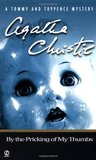
Book Review: By the Pricking of My Thumbs (Tommy and Tuppence) by Agatha Christie

Saturday, February 15, 2014

By the Pricking of My Thumbs (Tommy and Tuppence, #4)By the Pricking of My Thumbs by Agatha Christie
My rating: 5 of 5 stars

I admit it, I'm now a die-hard Tommy and Tuppence fan. Ok, so my adoration actually started upon seeing Anthony Andrews play Tommy in a rather muddled interpretation of this story. But if I hadn't watched the episode, I would have never decided to read the book! A book which, as it turns out, is loads better than what the screenwriters pieced together. Who knew they created such a dreadful Frankenstein's monster?!

When Tommy's aged Aunt Ada dies in a home for elderly ladies, her belongings are disposed of by Tommy and Tuppence, all except for a few knick-knacks, odds and ends, and a painting that originally belonged to one of the other elderly ladies in the home. Tuppence remembers quite vividly her encounter with Mrs. Lancaster, and talk of a child being buried behind a fireplace. In a sudden fit of whatever you want to call it, Tuppence decides to return the picture to Mrs. Lancaster, thinking the woman might want it back. Except that Mrs. Lancaster has been rather suddenly removed from Sunny Ridge, and now Tuppence is sniffing out some sort of foul play much to Tommy's chagrin. He's helpless to stop her, and while he's off at a very hush-hush meeting of English politicians and officials, Tuppence is doing reconnaissance of her own, determined to find Mrs. Lancaster just in case the woman was right about her stories of a dead child in a fireplace, perhaps even the house in the painting.

By the Pricking of My Thumbs is delightful. I literally never wanted to put it down, and I wouldn't have except that I had to work. It is absolutely nothing like the tv episode, and for that I'm glad because the book is so much more like Agatha Christie. A kindly old vicar of the highest virtue in a town full of mostly friendly people. This is Agatha Christie, perhaps not at her best, but at my favorite. I love Poirot and Miss Marple, but I do believe that Tommy and Tuppence Beresford are now my favorites of her characters. It's time to read the rest of their series, short stories and all!

For the rest of my reviews, see my page HERE.
Read More

Book Review: Diary of a Young Girl - the story of Anne Frank

Wednesday, March 28, 2012


Being homeschooled you sometimes miss a few things that would have been required. Like Anne Frank's Diary of a Young Girl from her 25 months of confinement in Holland while hiding from the Gestapo. This was required reading in middle school it seems, but my mom had me read The Hiding Place instead, which was traumatic enough. I also read all of David Wilkerson's books (author of Cross and the Switchblade) which deal with drug addiction and lost souls on the street. So, I was by no means lacking in a formal literary education. Yet I still raised a couple of eyebrows at work when a few coworkers heard that I hadn't read Anne Frank's diary. Since I wouldn't lose anything by reading it I decided to give it a go. Biographies aren't usually my thing but you can work your way through almost anything if you persevere, which is what I did.

Read More